
Back in 2014 I wrote about my first puntarelle, a Union Square find that I sliced, curled in ice water and dressed with anchovy and garlic. I was hooked. So this week, when I spotted a big pile of it at the market, I didn’t think twice. Give me!
It’s mid-October, a month or two ahead of the real season for puntarelle. This head had some lessons for me. Here’s how a light, slinky chicory still turned into a bowl of salad.
What puntarelle is
Puntarelle is a Roman chicory, also sold as Catalogna or asparagus chicory. The prize is the cluster of pale, hollow shoots hidden in the core of the head, not the long dandelion-like leaves outside.
The shoots are crisp and juicy with a clean bitterness, somewhere between fennel and endive. Romans slice them into strips, curl them in ice water, and dress them with anchovy and garlic.
Hunting for the shoots
The shoots were there, but small and well hidden. From the outside, the one I bought looked like a bundle of long green stalks with a fat white base, and nothing like the plump clusters I remembered.
I peeled off the outer leafy stalks one at a time, working inward. At first there was no tight cluster at all, and I figured this head simply didn’t have any.
Then, near the very bottom of the core, a handful of pale, bulb-shaped shoots appeared, each with a few jagged green tips. They were young and on the small side, but they were the real thing.
To free them:
- Cut each shoot off where it meets the core.
- Pull off the leafy green tips and any tough outer layer.
- Halve or quarter them lengthwise, then slice into thin strips.

Using the stalks and greens too
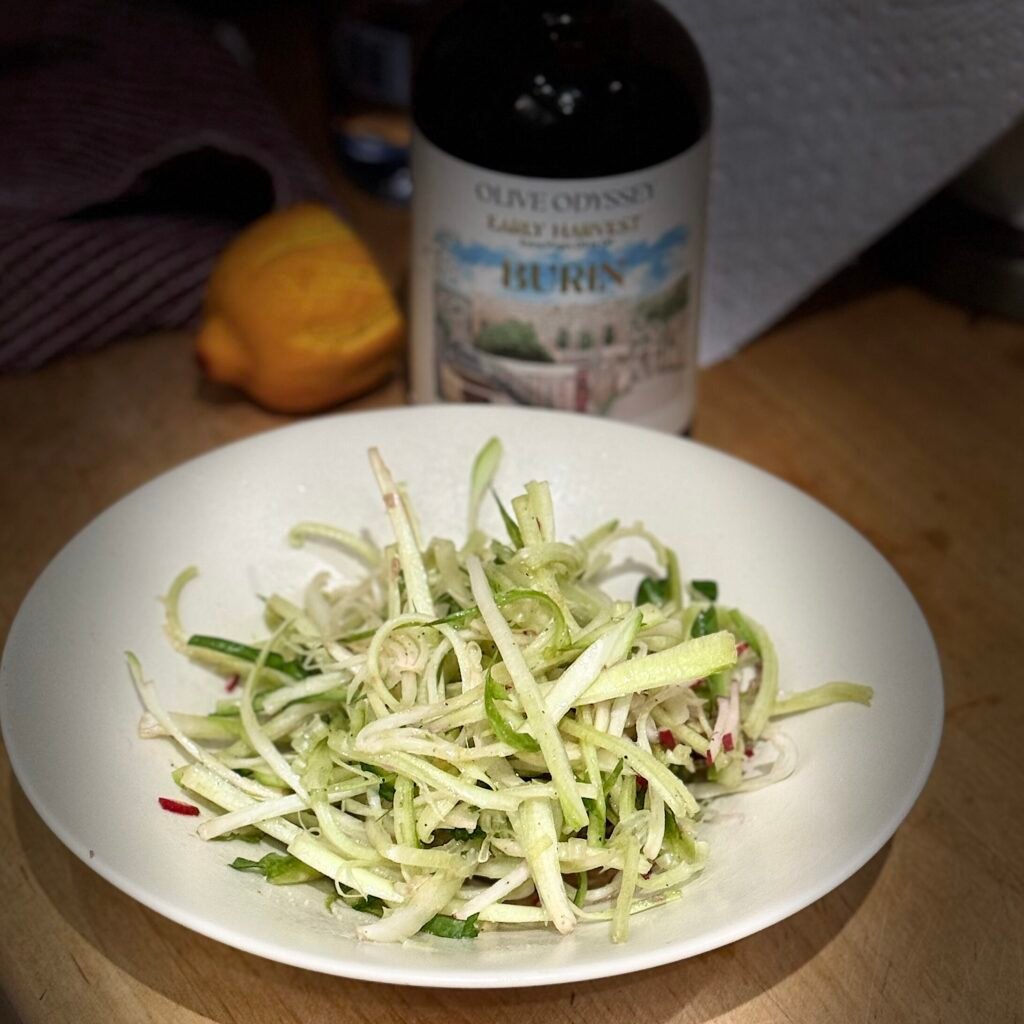
With only a few shoots, I bulked up the salad with the outer stalks. Nothing from the head went to waste.
- White and pale green wide bases: Good raw. Trim the leafy fringe and the dried bottom edge, then cut into thin lengthwise strips.
- Narrow, darker green stalks: More bitter and fibrous. Slice very thin for the salad if you like it sharp, or cook them.
- Stringy pieces: Run a vegetable peeler down the outside, like celery.
- The leafy greens: Blanch briefly, then sauté with garlic, chili and olive oil, the way you’d cook broccoli rabe.

The flat stalk strips don’t curl as dramatically as true shoots, but they crisp up nicely in ice water.
Puntarelle alla romana
The classic Roman salad needs only the shoots, an ice bath and an anchovy-garlic dressing.
A word on the taglia. I have my friend Judy Witts Francini in Tuscany to thank for mine. Her post on the taglia puntarelleat Divina Cucina showed me where to get one. Her own came from a kitchen shop in Bologna, after years of coveting the ones Roman market vendors use.
- Firm them up. Early or slightly limp shoots fight the taglia puntarelle, the wire-grid cutter. Soak the trimmed shoots whole in ice water for 20 to 30 minutes first, and they go through cleanly.
- Cut. Push each shoot through the cutter tip-first, or slice thin strips with a knife. Small shoots are often easier by knife.
- Curl. Drop the strips into ice water for 30 to 60 minutes. They curl, crisp up and lose some bitterness.
- Make the dressing. Pound 2 to 4 anchovy fillets with a clove of garlic into a paste. Whisk in a splash of red wine vinegar or lemon juice, then good olive oil.
- Dress and serve. Dry the strips very well, toss with the dressing and eat right away.
Why my head was light and slinky
My October head came in early, during a warm spell, and probably from a leafier variety. All three work against big, firm shoots.
- Season. In Italy, especially around Rome, puntarelle runs roughly November through March and peaks December to February. In the US it’s grown mostly in California, with some farms in the Northeast, and follows a similar window, sometimes showing up in October from fall plantings.
- Cold. Chicories like cold weather. The shoots fill out as the plant matures, and a few frosty nights make them sweeter and crisper. This fall’s warm stretch didn’t help.
- Variety. Italian growers plant types bred for dense shoots, such as Catalogna di Galatina or the Gaeta types. Many US growers plant Catalogna types that lean toward leaves, which stay looser even when mature.
- Freshness. Puntarelle loses its snap quickly. In Rome it’s often sold within a day or two of picking, which is part of why it feels so firm there.
I’ve seen this before. In January 2018 my vegetable purveyor had puntarelle and I ordered three pounds on the spot. They arrived hollower and woodier than the sturdy Union Square heads, yet once cut and chilled they were wonderfully crisp. The ice bath forgives a lot.
Next time
I’ll wait for December and pick a heavier head. Here’s what to look for:
- Weight. It should feel heavy for its size, not light.
- A swollen base. A fat, bulging bottom is where the shoots are packed in. A slim base with long leaves means little inside.
- Firmness. Squeeze the base gently. It should feel solid, not slinky.
- Timing. Shop after a few cold nights, ideally December through February.
And if there’s no good puntarelle to be had, there’s always faux puntarelle. Rick Easton’s trick, which I tried back in 2016, is to run the stems of green broccoli or broccoli rabe through the taglia and dress them the same way, with anchovy and lemony olive oil. Keep bread nearby for the scarpetta.
Still, I don’t regret grabbing an early one. I got a small, bright salad and a pan of garlicky greens out of it, plus a good excuse to try again in winter.


0 Comments