
Back at School: Chasing the Perfect Campagne Baguette
There’s a particular kind of baguette I’ve been chasing for years. Namely it’s a campagne baguette: rustic, dark-crusted, open-crumbed, with a flavor that’s earthy and fragrant. So when my job gifted me with a few extra days off, I used those hours to bake me some of those type of baguettes.
The Setup
This round was a return to the classics — a Campaillou formula adapted from Grands Moulins de Paris. It’s built around a levain pâteux and refreshed at a firm hydration. And instead of my usual flour, I used a freshly milled Yecora Rojo wheat from Grand Teton Family Farms — a hard red spring grain with a nuttiness and faint sweetness that commercial flour just never delivers.
I milled the grain myself, which meant the process started before the dough even existed. The dough leaned wet, dosed heavy on the levain, and split mostly white flour with a good hit of dark rye — plus a small dried rye starter and a touch of diastatic malt swapped in for the wheat germ the original French formula calls for. That’s the detail that makes it a true Campaillou rather than just a rye-flecked baguette.
Feeling Like a Student Again
The deeper you dive into baking bread, the more it feels being consumed by a science class you never signed up for but can’t quite quit, as its too fascinating in the moment to moment outcomes of whatever you experiments. Calculator going non-stop, half-formed hypotheses about last week’s loaf, constantly testing and adjusting.
To me, it’s humbling in the best way. Even after years of this, a campagne baguette sends you right back to the fundamentals — fermentation, dough strength, shaping tension, scoring angle. Every variable talks to every other one.
The Process
A cool, unhurried fermentation let the levain do its slow work — flavor first, volume second. Shaping a wetter, higher-extraction dough is its own discipline: enough tension to hold the shape through the final proof, not so much that you knock the gas structure out.
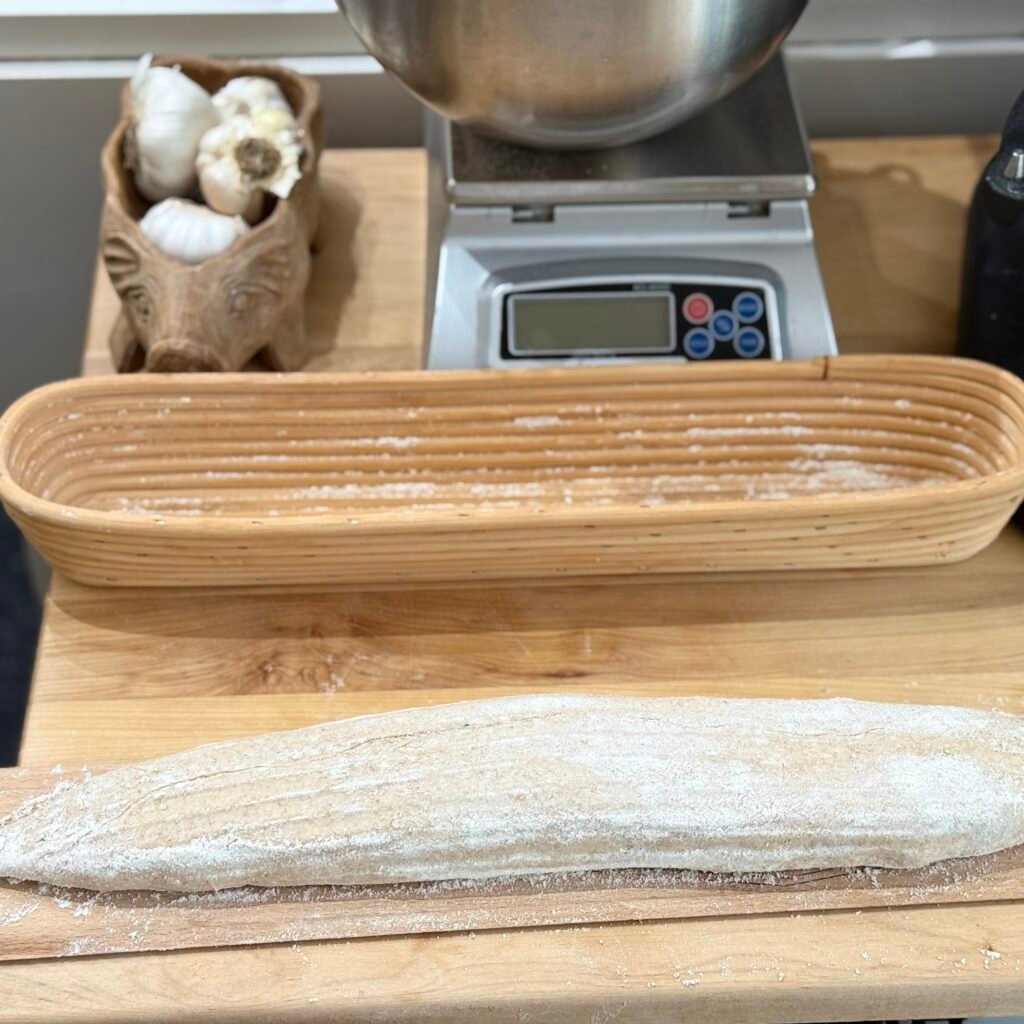
Into the banneton, a fold, a score, and into a hot, steamy oven.
The Result
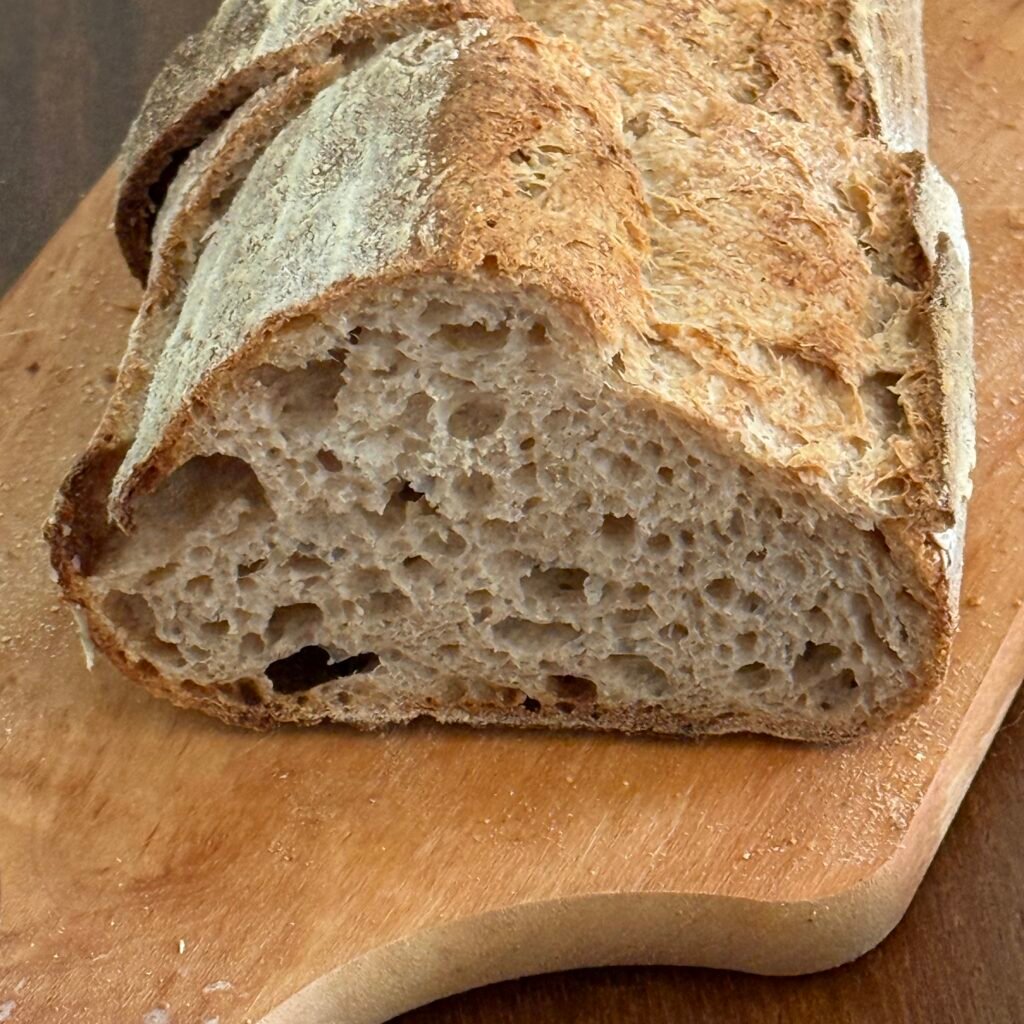
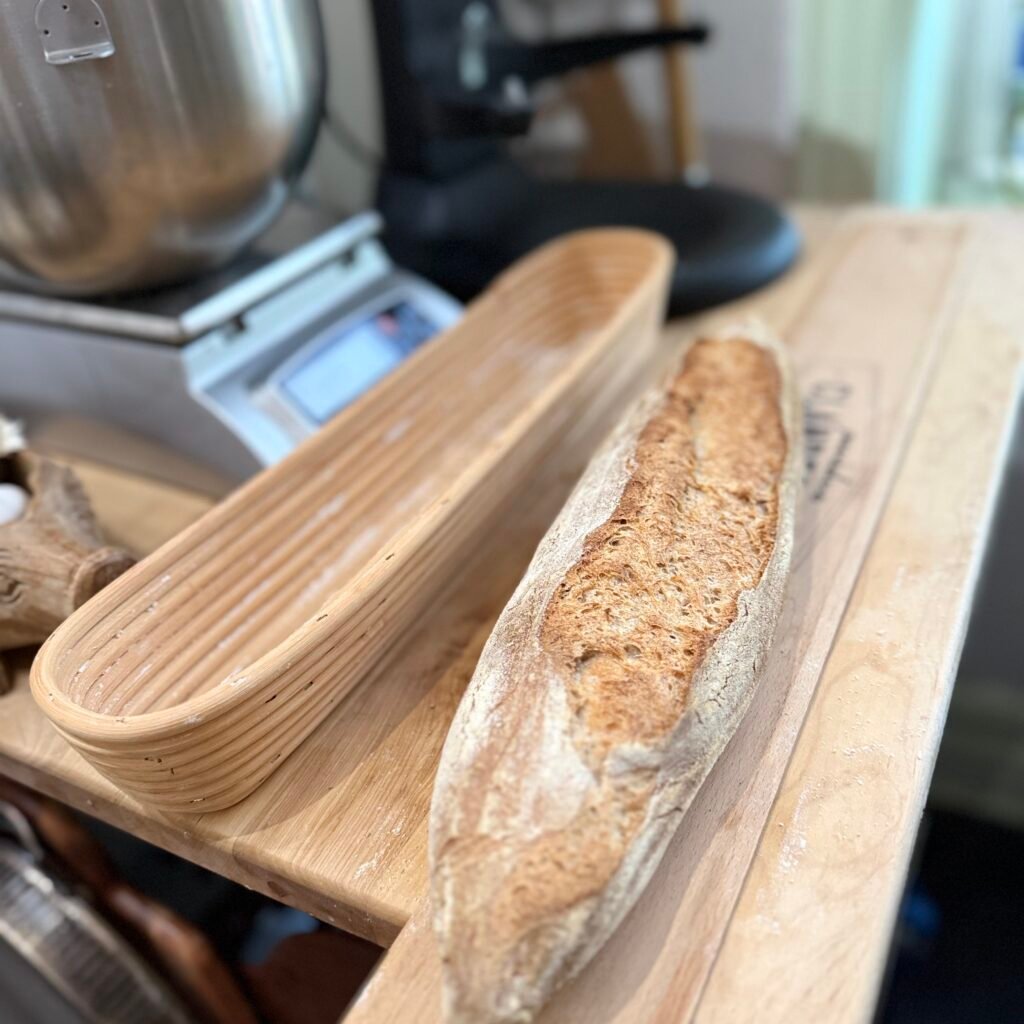
Exactly what I was after: a deeply blistered, almost mahogany crust with real shatter to it, and a crumb that’s open and irregular — those uneven, glossy holes that tell you fermentation and shaping worked together instead of fighting each other. Cut in after a proper cooling rest, and it held clean — no gumminess, just that faint tang from the levain and the round, nutty sweetness of the Yecora wheat.
It’s a good reminder of why I keep doing this. A few days off work, and I came back not rested exactly — but recharged in a different way. Flour under my fingernails, already thinking about what to test next.
0 Comments