
Swiss Multigrain Meets Sicilian Heritage Flour
Pane Nero di Castelvetrano is dark, dense, deeply flavored bread built around Sicily’s ancient grains. It’s also become a staple in my oven. I’m not alone. Ever since Gustiamo began importing ancient Sicilian flours from Filippo Drago’s Castelvetrano mill bakers from Sicily to the Bronx (and Detroit) are baking their own version of this loaf.
Some thoughts I’ve shared previously. Bread is a rigorous, almost scientific process, but it is also an art. Multiple conditions— room temperature and humidity, the acidity of your starter, the freshness of the flour — all shape the final loaf as much as the formula does. Guistiamo offers a recipe for this bread as a guideline. But it is meant to be reshaped according to each baker’s own habits, fermentation techniques, and weather.
That spirit of adaptation is exactly what drew me to this bread, and this time I decided to run two versions side by side: a multigrain “Pain Noir” blend from a sixth-generation Swiss mill, and the heritage Sicilian flours of Filippo Drago himself — Bianco di Tumminia, Maiorca, and semola rimacinata.
The Problem with European Flour and High Hydration
Anyone who has tried to take a sourdough formula developed for American flour and apply it directly to European flour will usually face frustration. American bread flours run high in protein. They come from hard wheat varieties bred for exactly a particular type of gluten development and water absorption. European flours — Swiss, Italian, French — are generally softer wheat with a lower protein ceiling. Apply the same hydration percentage to both, and the European dough turns into soup while the American dough barely comes together.
The Gustiamo formula calls for 75% hydration, with either a liquid sourdough (licoli) at 30% of the flour weight or a firm sourdough (lievito madre) at 20%, plus 1.8% sea salt — figures calibrated for the kind of strong American flour the Bronx and Detroit bakers in Gustiamo’s network typically work with. The challenge was adapting that same formula to two soft European flour systems, each by a different route.
Version One: Swiss “Pain Noir” Mehl and a Wet Licoli
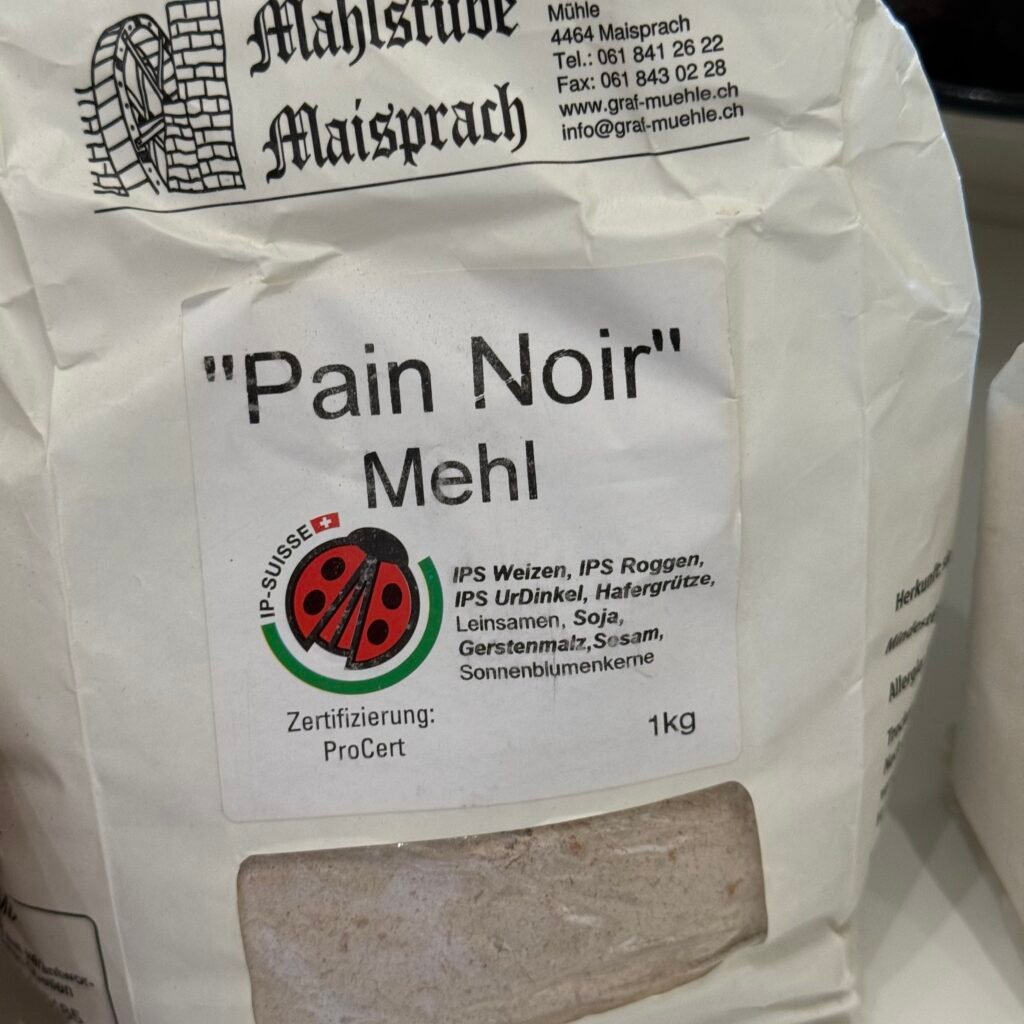
Pain Noir Mehl from Mahlstube Maisprach — a sixth-generation Swiss mill in the Basel-Landschaft
This bag comes from Mahlstube Maisprach, a sixth-generation mill in Switzerland known for its pre-blended specialty flours — a tradition where the miller does the work of balancing grains and seeds into a single bag, almost a regional signature in itself. The “Pain Noir” Mehl is a full multigrain composition: wheat, rye, Urdinkel (ancient spelt), Hafergrütze (oat groats), Leinsamen (flaxseed), Gerstenmalz (barley malt), sesame, sunflower seeds, and soy — all already blended, with no separate soaker or scald needed.
That is a lot going on before the levain even enters the picture. Flaxseed forms a mucilage gel that locks up water rather than contributing to gluten development. Oat groats pull moisture out of the dough slowly through fermentation. Sunflower seeds add bulk and oil while diluting the gluten-forming fraction further. The barley malt is the one ingredient actively helping — its enzymes break down starches into fermentable sugars, feeding the levain and contributing to crust color and that characteristic dark, faintly sweet edge.
The solution was to push the levain itself rather than the flour. I built a potent, very wet 1:1:1 licoli — refreshed and fed on American whole wheat — and used that to bring the effective hydration up. A young, vigorous liquid starter carries water into the dough in a form already partially broken down by enzymes, rather than asking the flour’s gluten network to absorb raw water on its own. The dough was noticeably sticky going into the banneton, but it held its shape through the final proof.
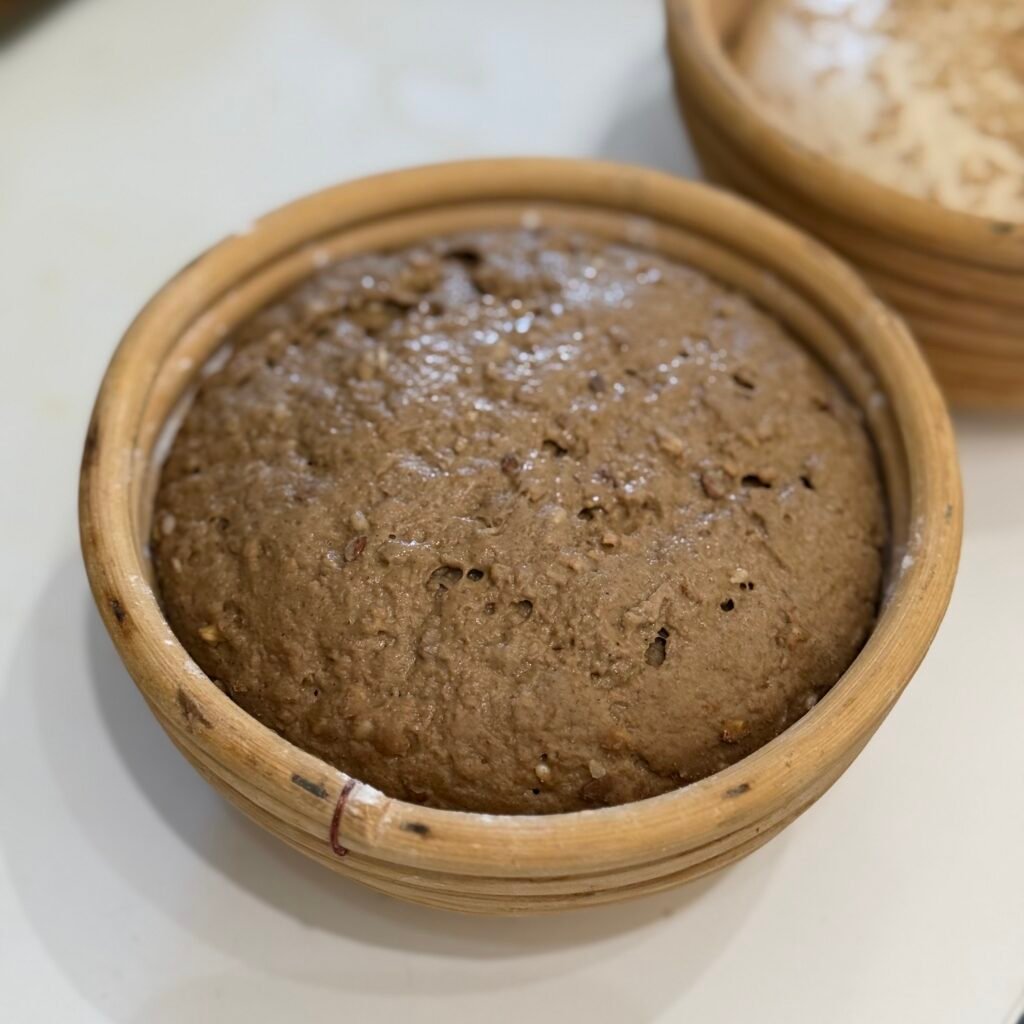
The Swiss Pain Noir dough proofing in the banneton — dark, dense, and fragrant with seeds
Version Two: Filippo Drago’s Sicilian Grains and a Firm Levain
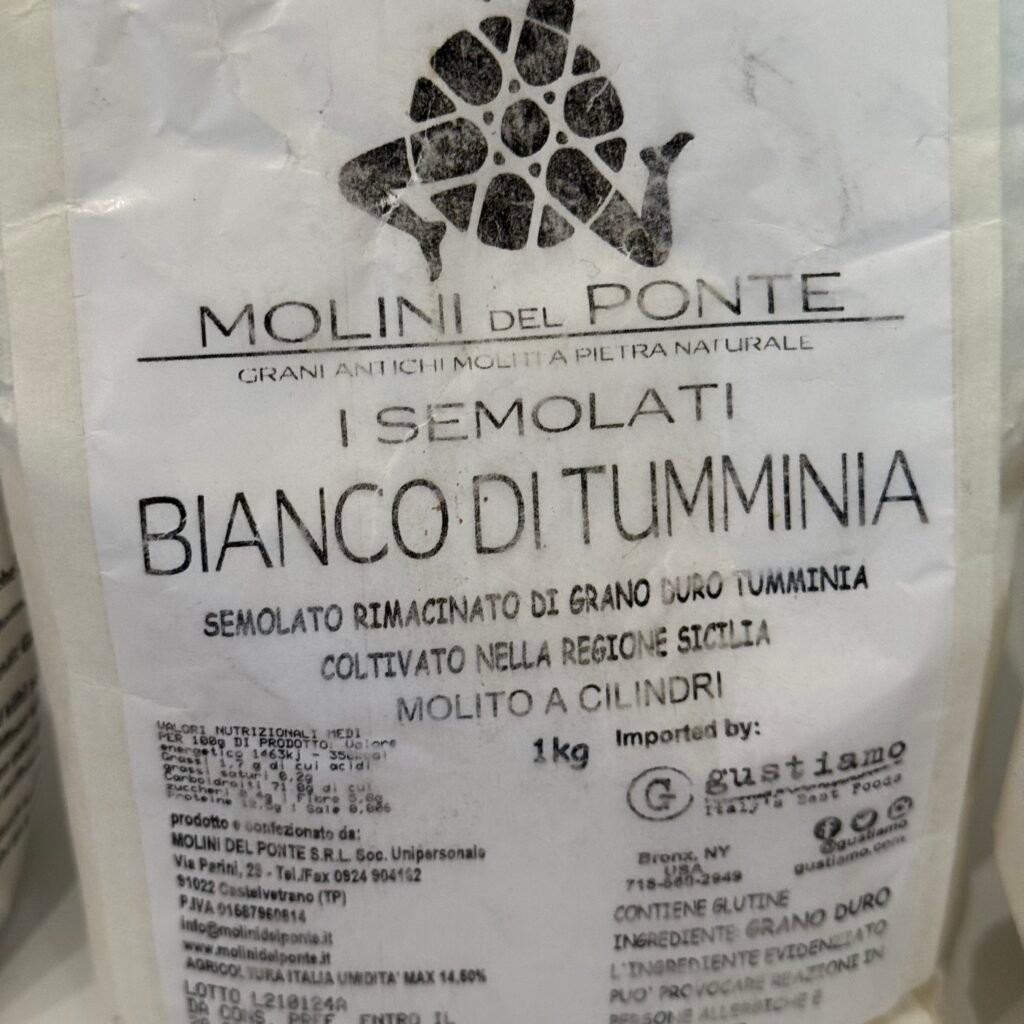
Bianco di Tumminia — semolato rimacinato di grano duro, from Molini del Ponte, Castelvetrano
For the second loaf, I drew on the remaining bags of Filippo Drago’s flours from Molini del Ponte: Bianco di Tumminia (a rimacinato semolato of the ancient Tumminia durum wheat, grown in Sicily and stone-milled), Maiorca (a soft Tipo 1 wheat flour, also Sicilian), and semola rimacinata — substituted together in place of the Pane Nero flour blend in the original formula.
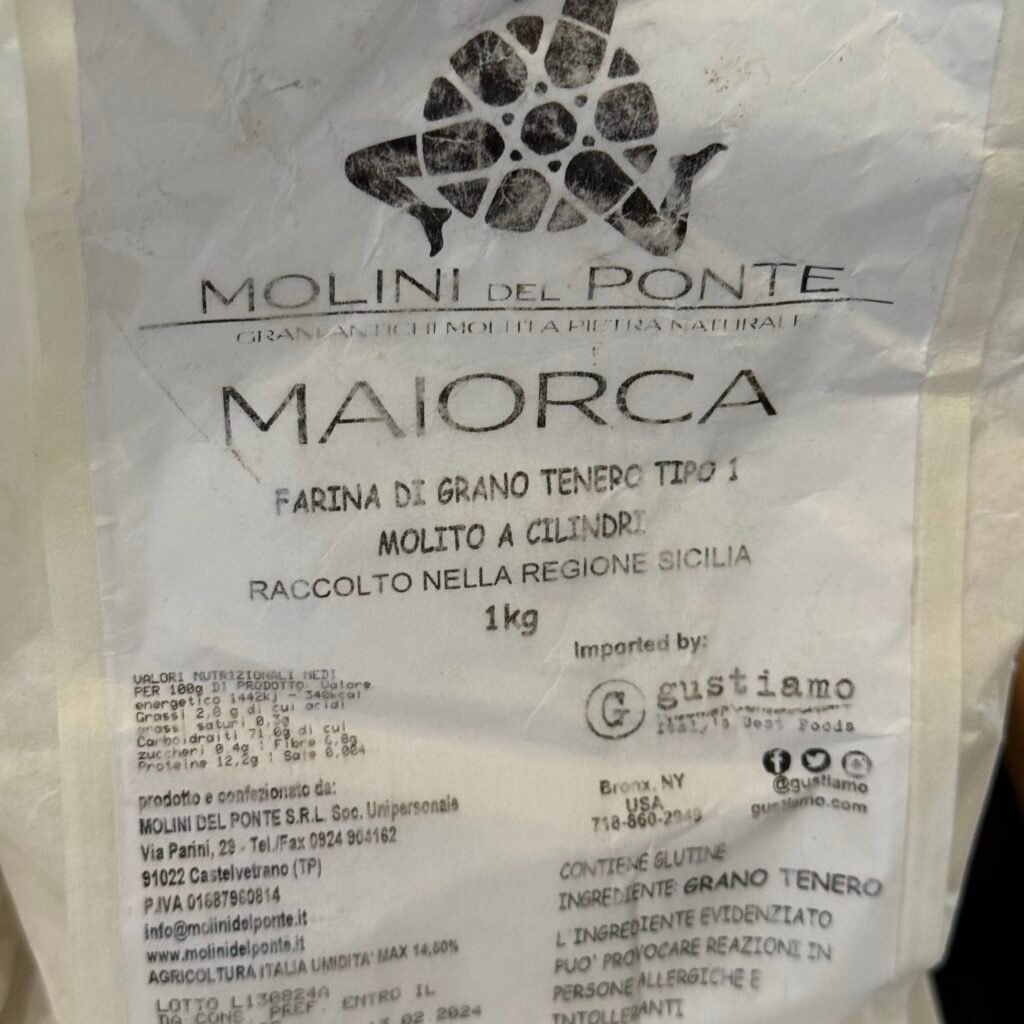
Maiorca — Farina di Grano Tenero Tipo 1, also from Molini del Ponte
Tumminia is notoriously weak in gluten structure despite its durum classification, and Maiorca is a soft flour as well, so this dough needed structure from somewhere other than the grain itself. Here the choice was a firm levain — lievito madre, or levain dur — built at lower hydration. The mild, more lactic-forward fermentation of a firm starter gave the dough backbone it would not otherwise have had, while the semola rimacinata contributed what structural protein it could.
True to the Gustiamo formula for Pane Nero, this loaf was topped generously with sesame seeds before its final proof — the signature of the bread as baked in Castelvetrano.
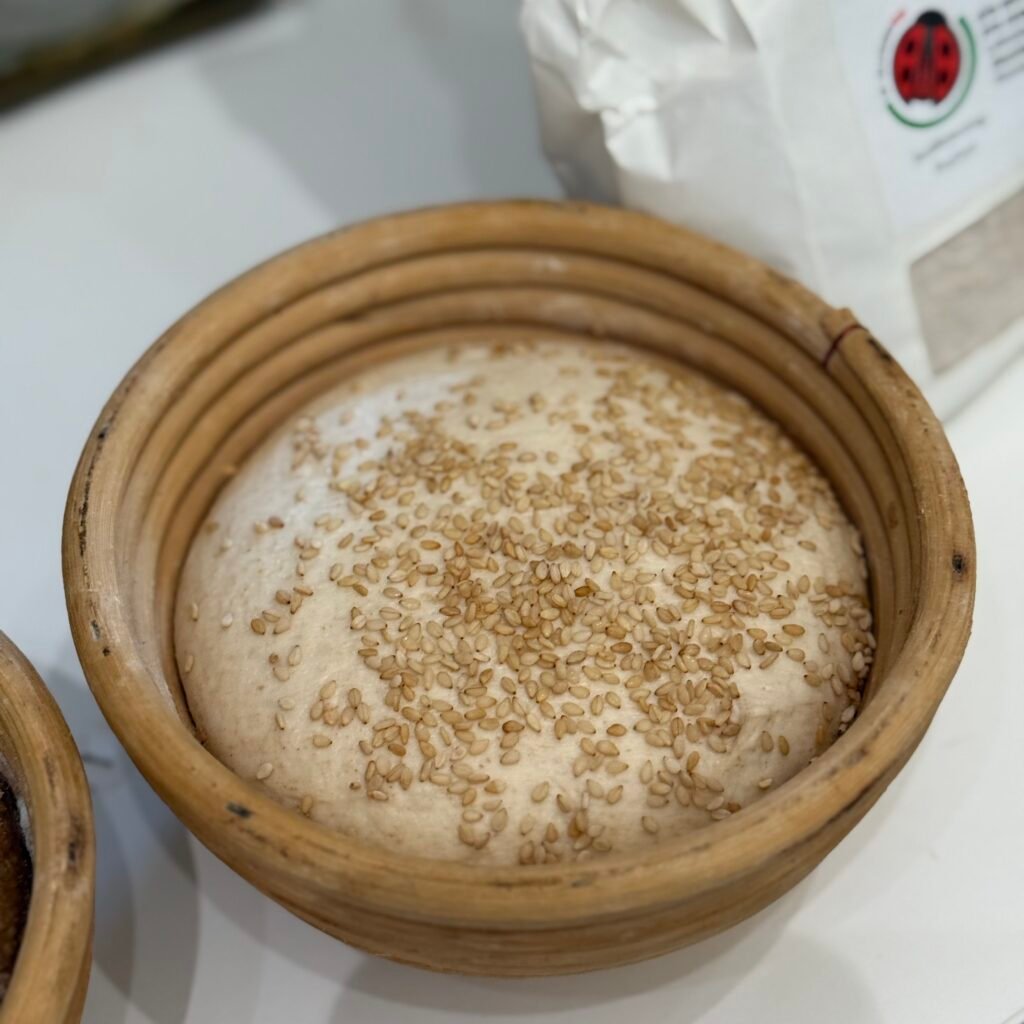
The Sicilian dough proofing, crowned with sesame seeds — the traditional Pane Nero finish
Into the Oven
Both loaves fresh from the oven — sesame-crowned Sicilian in front, dark Swiss behind
The two loaves baked side by side, and the contrast carried straight through to the finished bread. The Sicilian loaf, topped with its dense coat of toasted sesame, came out with an even golden-brown dome — a nice symmetric shape, clean and confident, the sesame seeds uniformly toasted without scorching. The structure held beautifully despite Tumminia’s reputation for weak gluten, a testament to what a firm levain can do to prop up a delicate flour.
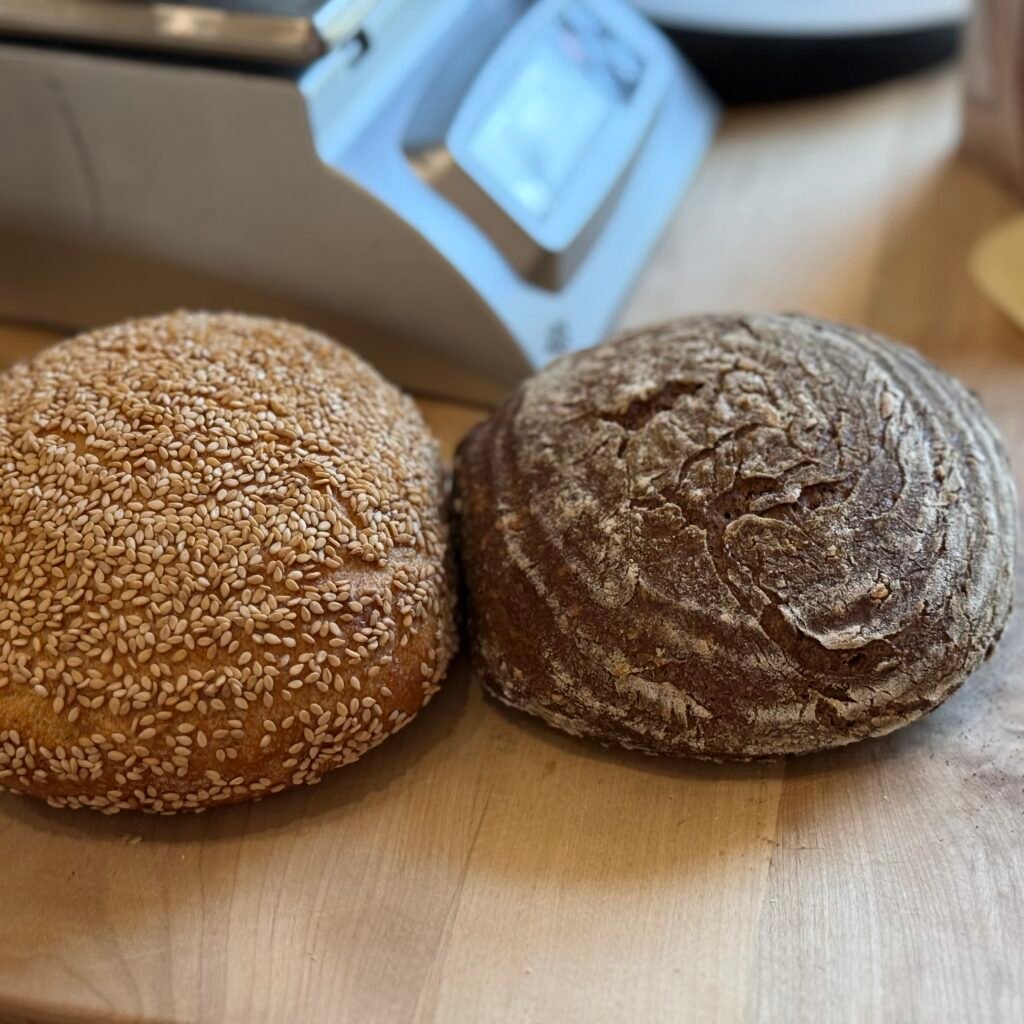
Side by side on the board — sesame Sicilian on the left, dark craquelé Swiss on the right
The Swiss Pain Noir loaf is the more visually dramatic of the two. A deeply cracked, heavily flour-dusted crust pulls apart into jagged white-and-brown fissures, almost volcanic in character. That craquelé quality comes from the combination of the multigrain blend, the active licoli, and the lower structural ceiling of Swiss flour — lower hydration in terms of gluten support, higher hydration in terms of what the seeds are holding. The crust shatters rather than blisters, and the color goes deep.
A closer look at both crusts — sesame dome on the left, dark craquelé on the right
Side by side, the two loaves landed at a surprisingly similar size and oven spring — two completely different flour systems, two starters at opposite ends of the hydration spectrum, both arriving at a comparable final volume. That convergence feels like the real result of the experiment.
What’s Next
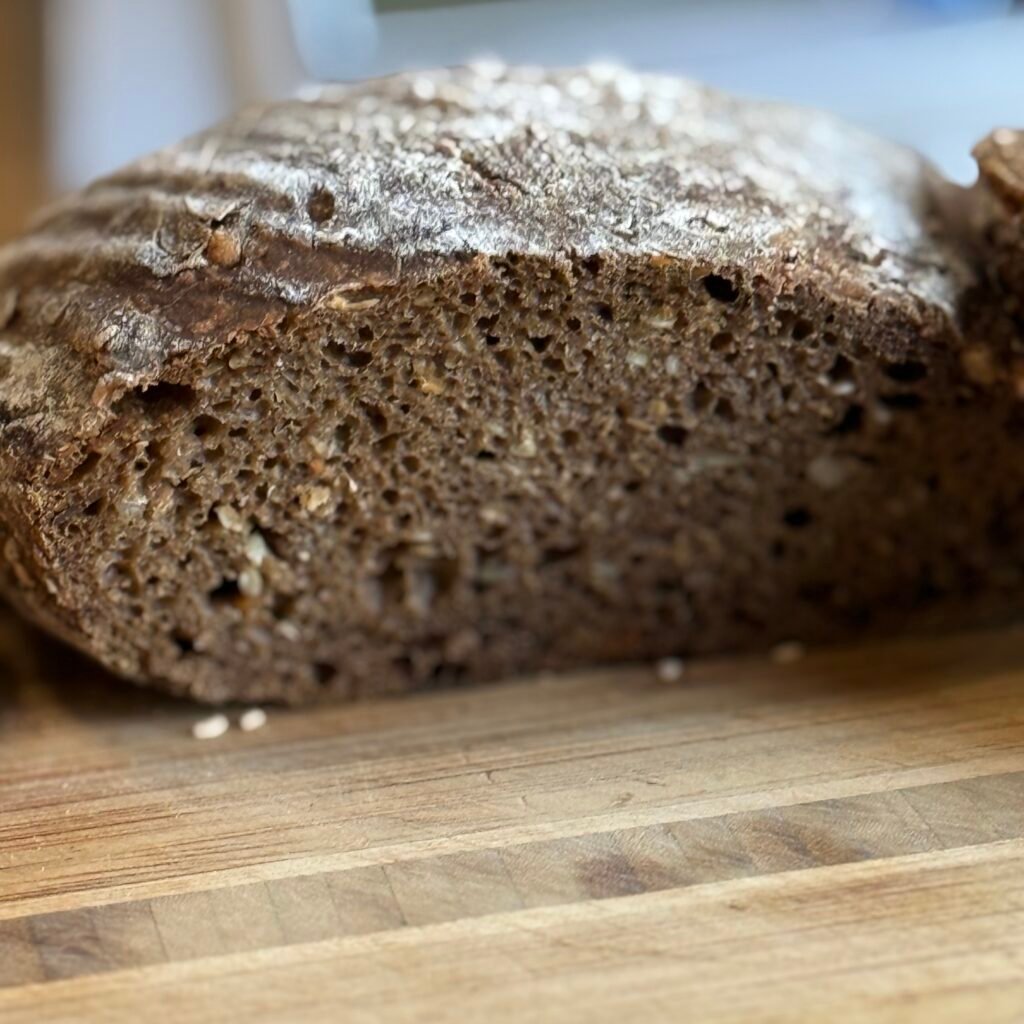
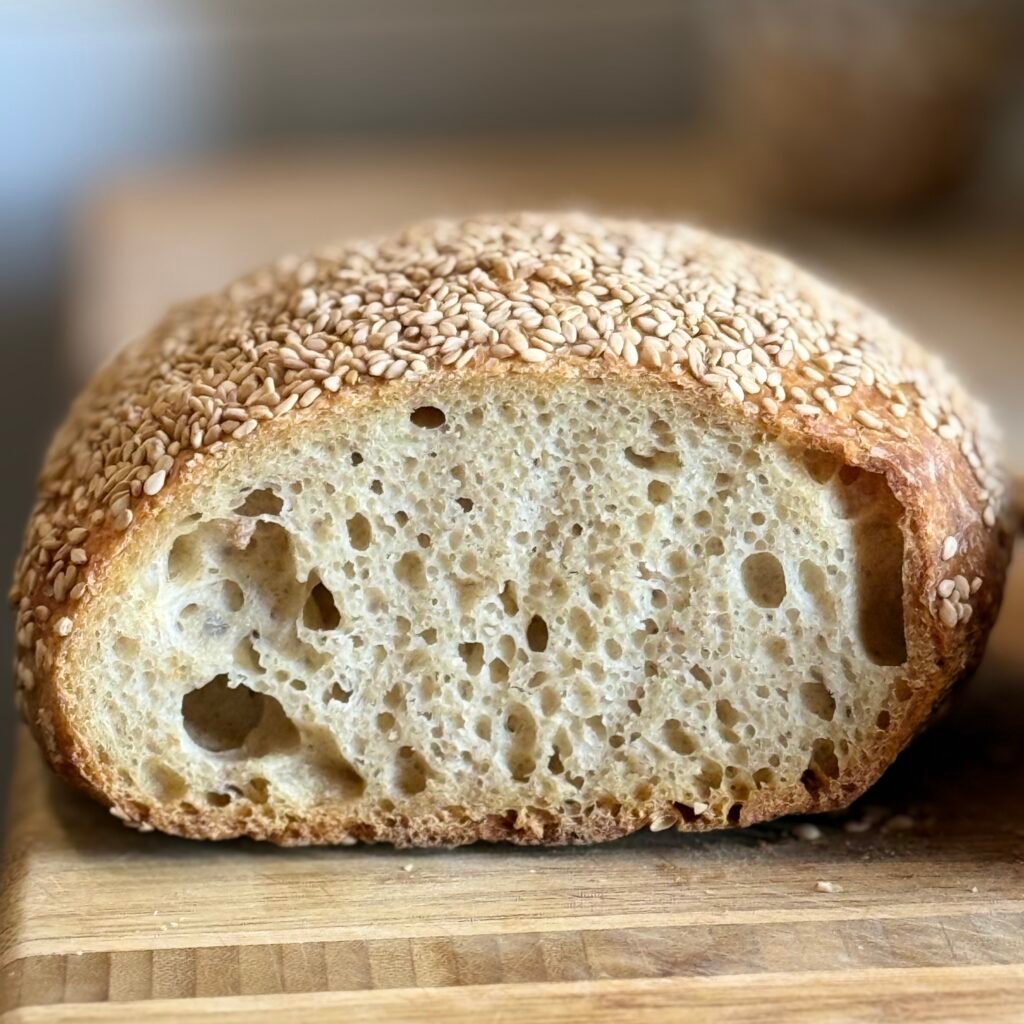
Both loaves are still cooling — and patience matters here, especially with the seed and whole grain content in the Swiss loaf. Flax and oats hold onto moisture longer than refined flour, so the crumb is still finishing its set even once the crust feels cool. Cutting in too early risks a gummy slice on bread that took real care to get right.
Once they’re fully cooled, the real test begins: does the wet licoli give the Swiss multigrain loaf a more open crumb, while the firm levain leaves the Sicilian loaf tighter and chewier? A crumb update will follow once it’s safe to find out.
For Reference: Gustiamo’s Pane Nero di Castelvetrano Recipe
For anyone curious about the baseline formula both of these loaves were adapted from, here it is as Gustiamo shares it — written for bakers with a sourdough starter, a mixer, and a professional oven, and offered as a guideline to be reshaped to your own conditions.
Ingredients
- Castelvetrano flour, 1kg
- Liquid sourdough (30%), 300g — or solid sourdough (20%), 200g
- Fine sea salt (1.8%), 18g
- Water at room temperature (75%), 750g
- Sesame seeds
Method
- In a dough mixer, combine the flour, sourdough starter, salt, and about 70% of the water (525g).
- Mix at the slowest speed, adding the remaining 30% of the water little by little. Aim for a final dough temperature between 78°F and 82°F.
- Let the dough rest at room temperature for 1 hour, covered.
- Make a fold, then rest covered for another 30 minutes.
- Divide into 500–600g pieces and shape each into a round loaf.
- Place on a tray, cover, and let proof for 2 hours.
- Arrange the loaves touching each other and sprinkle generously with sesame seeds.
- Bake at 465–485°F with light steam for 30 seconds.
- Let the steam out for 1 minute.
Lower the oven to 390–410°F and bake for about one hour, until dark br

0 Comments