
A Mouthful of Deliciousness
I recently returned to a formula, one which I would translate from a previous translation given to me by one of my pastry instructors years ago while attending culinary school. It’s worth sharing for several reasons, not least among them that it was baked under the pressure of preparing for an evening at home with guests.
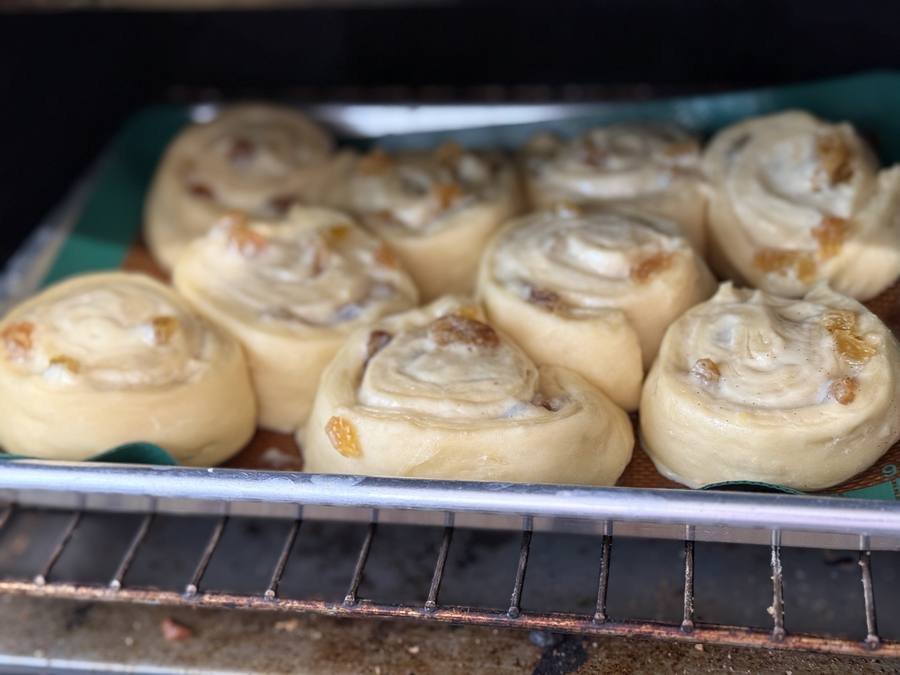
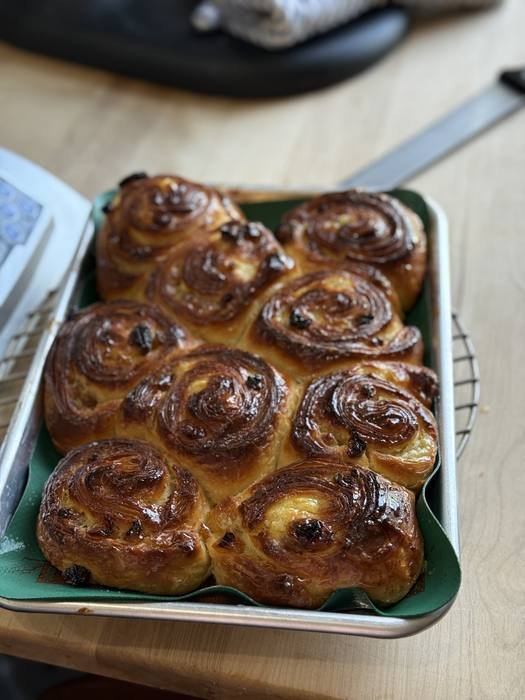
The recipe was for pâte à couques — the laminated dough that becomes couques aux raisins when spread with pastry cream, scattered with raisins, and then rolled into a log and sliced cut-side up onto the tray. In my version, I substituted a day-old starter for the sweet levain of the original. Anyway, I’m sharing some of what happened as it’s something that made me feel time pays its rewards.
To get to the point, the results came out deep amber across the spiral tops. The lamination striated in tight concentric rings with the raisins dark and jammy at the edges with pastry cream dissolving quietly into the dough. When you pulled one apart, the layers separated into audible sheets. The interior was airy in the way that only properly laminated dough achieves — not bready, not hollow, but something particular and earned. And then underneath the butter and sugar and raisin, you experienced the suggestion of the living culture that leavened it.
Again, these were created far away from ideal conditions — any careful baker can manage that. In my version, the clock ticking away just before my guests’ arrival, I had to substitute day-old starter for the sweet levain of the original.
That bake made me think that years in the kitchen do contribute to a basic competence that allows a baker to read their starters at a glance, make a sound substitution, hold the lamination through all distractions, and still produce something worth serving warm to guests. Somewhere across those years of repetition and return, it became something that could bend a little — starter instead of sweet levain, other fires burning — and still hold for the ultimate translation of a formula, theory emerging into deliciousness.
See below for the original formula.
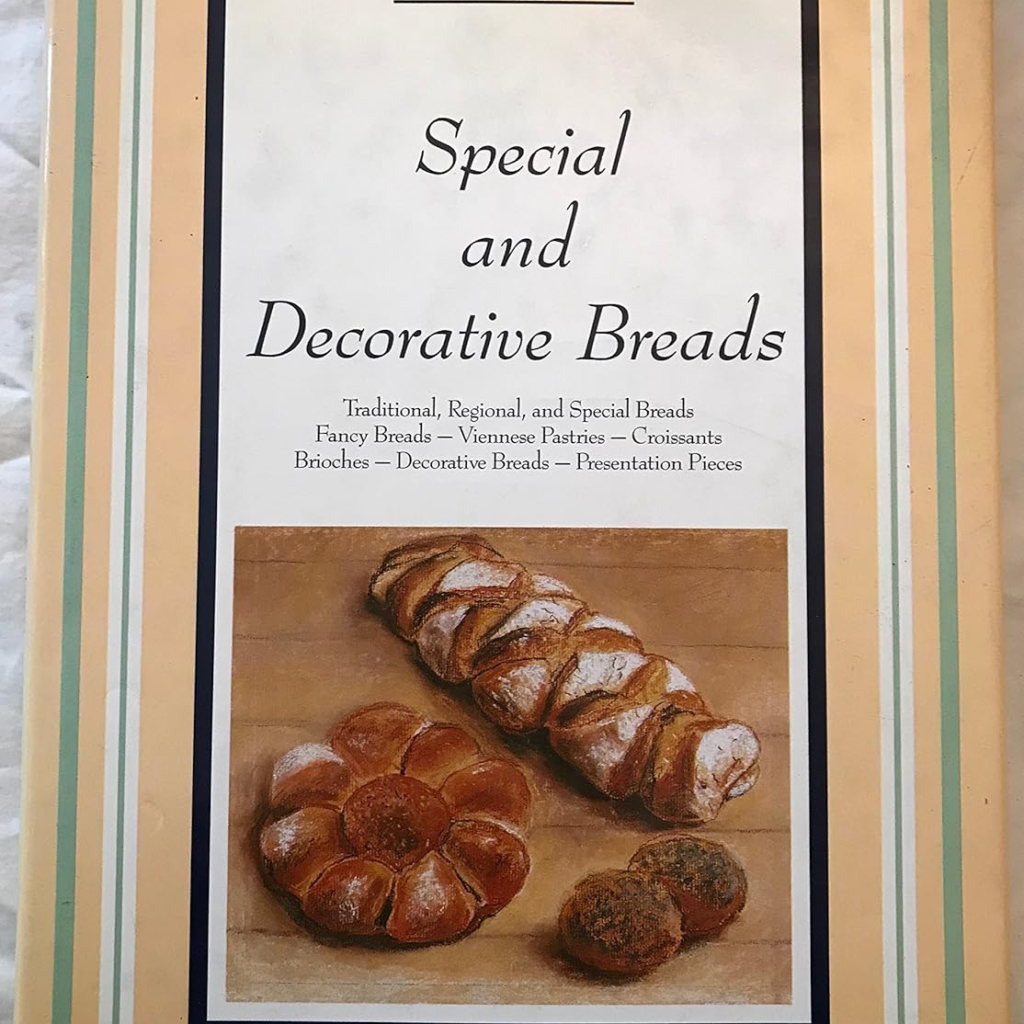
The formula
This pâte à couques is a two-stage build: a levain of pre-fermented flour at 9.94% carried into the final mix — ideally a sweet levain, mild and active, to enrich rather than assert. This time I used my established starter directly, one day without refreshment, held at cooler temperature in my sourdough proofing box. Not a discard decision — a deliberate one, made by someone who knows this particular culture well. The percentages below are the full formula as written.
Pâte à couques
Total yield: 1,570 g · Pre-fermented flour: 9.94% · Butter: ¼ total dough weight (lamination block)
| Ingredient | Total % | Total g | Levain % | Levain g | Final Mix % | Final Mix g |
|---|---|---|---|---|---|---|
| FLOUR | ||||||
| AP Flour | 50.00% | 417.8 g | 50.00% | 41.5 g | 50.00% | 376.3 g |
| Bread Flour | 50.00% | 417.8 g | 50.00% | 41.5 g | 50.00% | 376.3 g |
| LIQUIDS & ENRICHMENT | ||||||
| Milk | 35.44% | 296.2 g | — | — | 39.35% | 296.2 g |
| Eggs | 24.37% | 203.6 g | — | — | 27.06% | 203.6 g |
| Sugar | 11.38% | 95.1 g | 22.08% | 18.3 g | 10.20% | 76.7 g |
| Salt | 1.77% | 14.8 g | — | — | 1.97% | 14.8 g |
| Water | 9.94% | 83.1 g | 100.00% | 83.1 g | — | — |
| Levain | — | — | — | — | 30.03% | 226.0 g |
| Yield | 187.87% | 1,570.0 g | 272.08% | 226.0 g | 208.60% | 1,570.0 g |
| Total Flour | 100.00% | 835.7 g | 100.00% | 83.1 g | 100.00% | 752.6 g |
Butter: ¼ total dough weight — added as the lamination block, not into the détrempe.
Kneading: 4 minutes slow, 3 minutes medium.
Turns: 1 or 3 single turns.
Rising: 1 hour bulk — or 12 hours cold. Proof to bake at 1 hour, or longer with sourdough.
Bake: 425°F / 220°C for 15 minutes.
All that theory. All those retries.
And in the end, just a mouthful of deliciousness.
0 Comments