
Or the connecting points between great bread, home milled flour, Swiss baking techniques, and the glorious grains that come out of eastern Idado.
There is a particular kind of bread frustration that only home millers know. You invest in a quality stone mill — a Komo, say — you source beautiful heritage grain, you grind it fresh, and the loaf you pull from the oven is dense. Nutritious, flavorful even, but dense. The crumb is tight. The bran is present in every bite in a way that is honest but not exactly what you had in mind. Inotherwords, you feel righteous but there’s more a moral than sensual payoff.
That was my experience for years. It took an obsession with Swiss baker Marcel Paa’s breads, as well as a nudge from my friend Thierry Delabre (a baker who had been working with sifted flours long before I took it seriously) to finally reframe how to appreciate home milled flour. More precisely, it took me time to have actually enjoy the fruits of the labor.
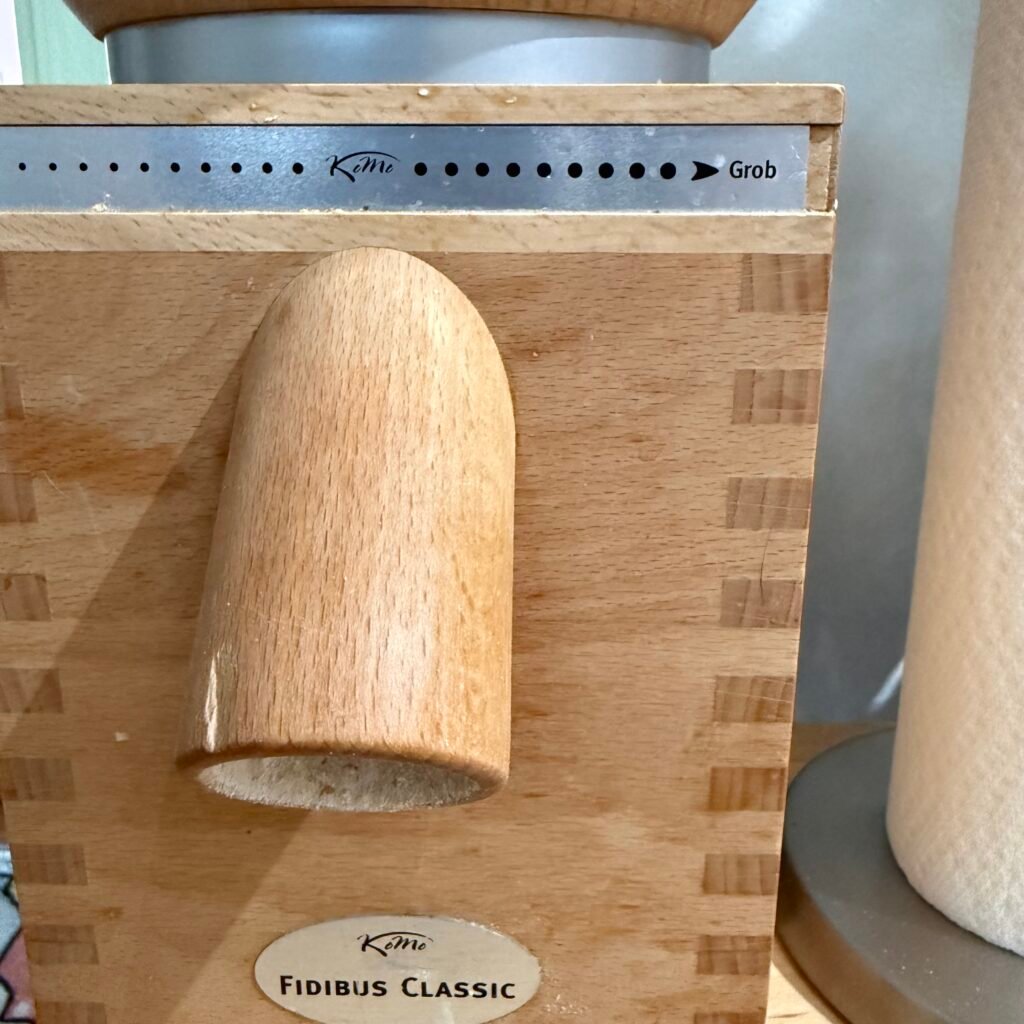
This post is an attempt to map a better path, aiming the post towards home millers working with heritage grains who want to move beyond 100% whole grain and start milling to specification.
Why Fresh-Milled Bread Is Dense: The Physics
Stone milling produces whole grain flour in the truest sense: the bran, germ, and endosperm are all present. This is nutritionally ideal but structurally complicated. Bran is physically sharp — the cell walls of the outer wheat kernel are hard and angular — and as a dough develops, those sharp bran particles act like tiny blades cutting through gluten strands as they form. The result is a gluten network with reduced integrity, which means less gas retention, a tighter crumb, and a denser loaf.
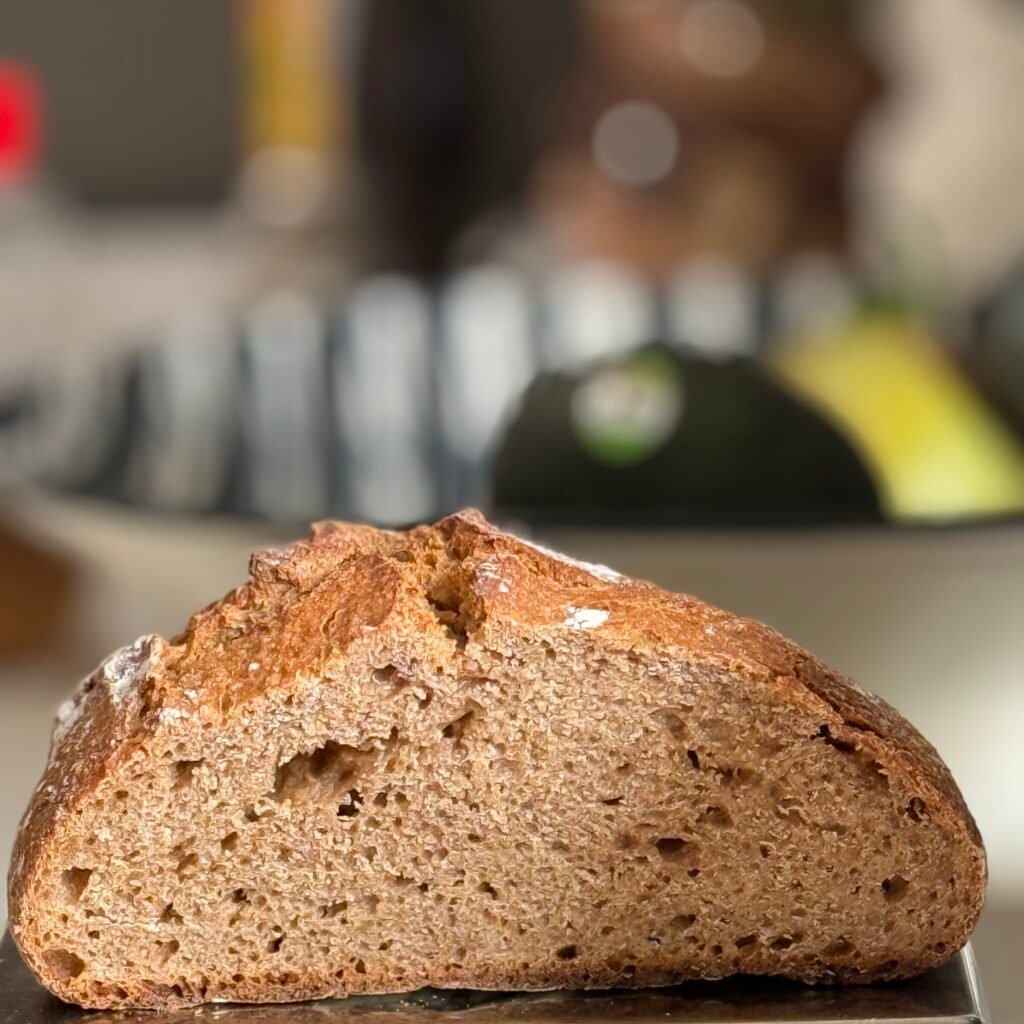
This is not a flaw in the Komo or in your technique. It is the nature of 100% whole grain flour, and understanding it is the first step toward working with it rather than against it.
Three variables do the most to change this:
Hydration. Fresh-milled whole grain is thirsty. Bran absorbs significant water that would otherwise develop the gluten. Working at 80–85% hydration (or higher with rye) compensates for this, though it makes dough handling more demanding.
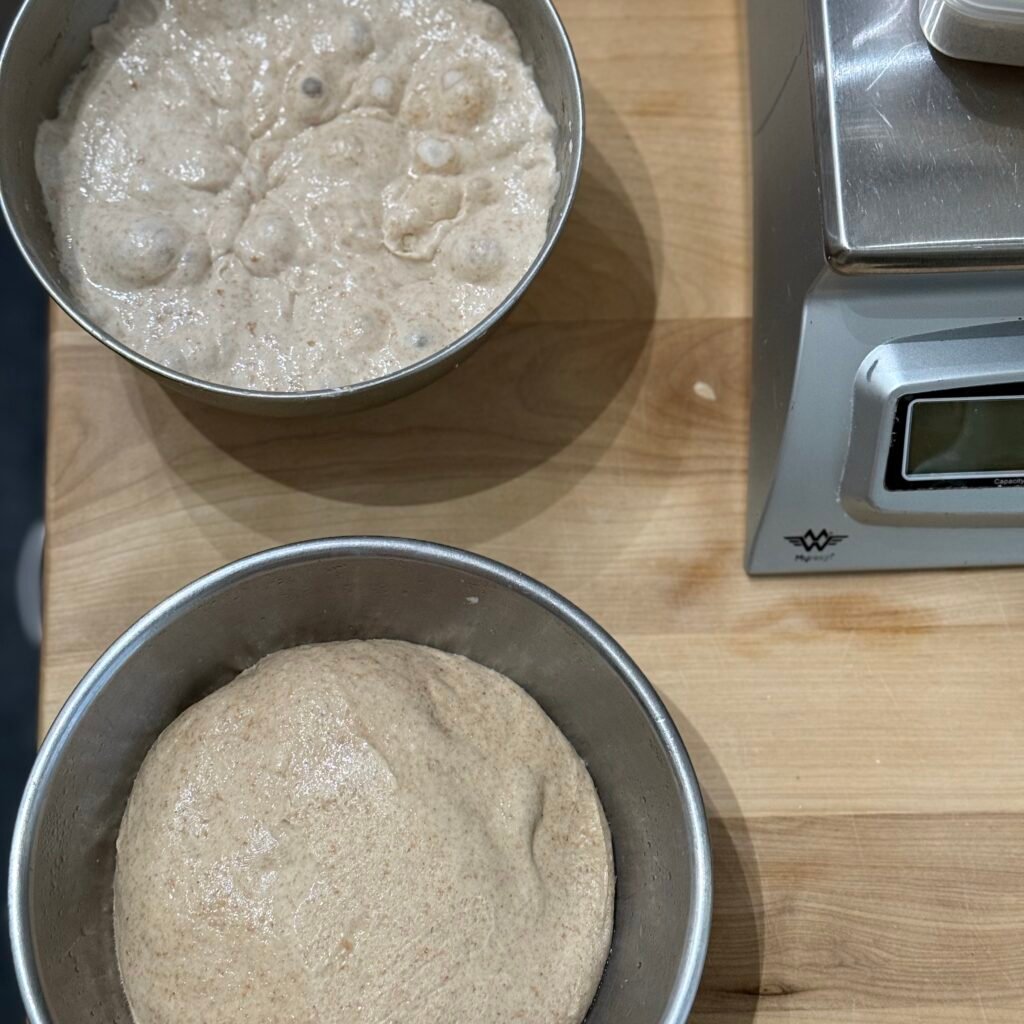
Time. A long autolyse — anywhere from 45 minutes to several hours before adding salt or levain — allows bran to hydrate and soften before gluten development begins. The bran is still there, but it is no longer rigid when the gluten network forms around it.
Extraction. This is the lever that changes everything. Removing even 10–15% of the coarsest bran from your flour transforms how it behaves. The gluten network can develop more freely. The loaf rises taller. The crumb opens. You still have a flour with far more character and nutrition than commercial all-purpose, but the structural constraints are greatly reduced.
Extraction is where the sifter enters the picture — and where Swiss flour taxonomy becomes directly useful, a focus that my step-sister in Switzerland has been trying for years to teach me.
The Swiss Flour System — and How to Replicate It at Home
Switzerland classifies flour by ash content — mineral residue after incineration, which rises with bran and germ presence. The type numbers correspond roughly to ash percentage multiplied by 1000, and they map directly onto extraction rates: the proportion of the whole grain that ends up in the flour. The gap between American commercial flour and Swiss specialty flour sits almost entirely in the 80–90% middle ground — barely a retail category in the US, yet where most of the character lives. That middle ground is precisely what a Komo and sifter can produce.
| Swiss Name | Type (Ash) | Extraction | Mesh to Replicate | Character |
| Weissmehl | ~400–550 | ~72% | 100–120 mesh | White, refined; enriched doughs, Zopf |
| Halbweissmehl | ~900 | ~80–85% | 60–80 mesh | More flavor, good structure; natural starting point |
| Ruchmehl | ~1100–1200 | ~85–90% | 30–50 mesh | Rustic, mineral, open crumb possible |
| Vollkornmehl | ~1700+ | 100% | No sifting | True whole grain; dense by nature |
| Urdinkelmehl | varies | varies | varies | Sifted or whole spelt; depends on producer |
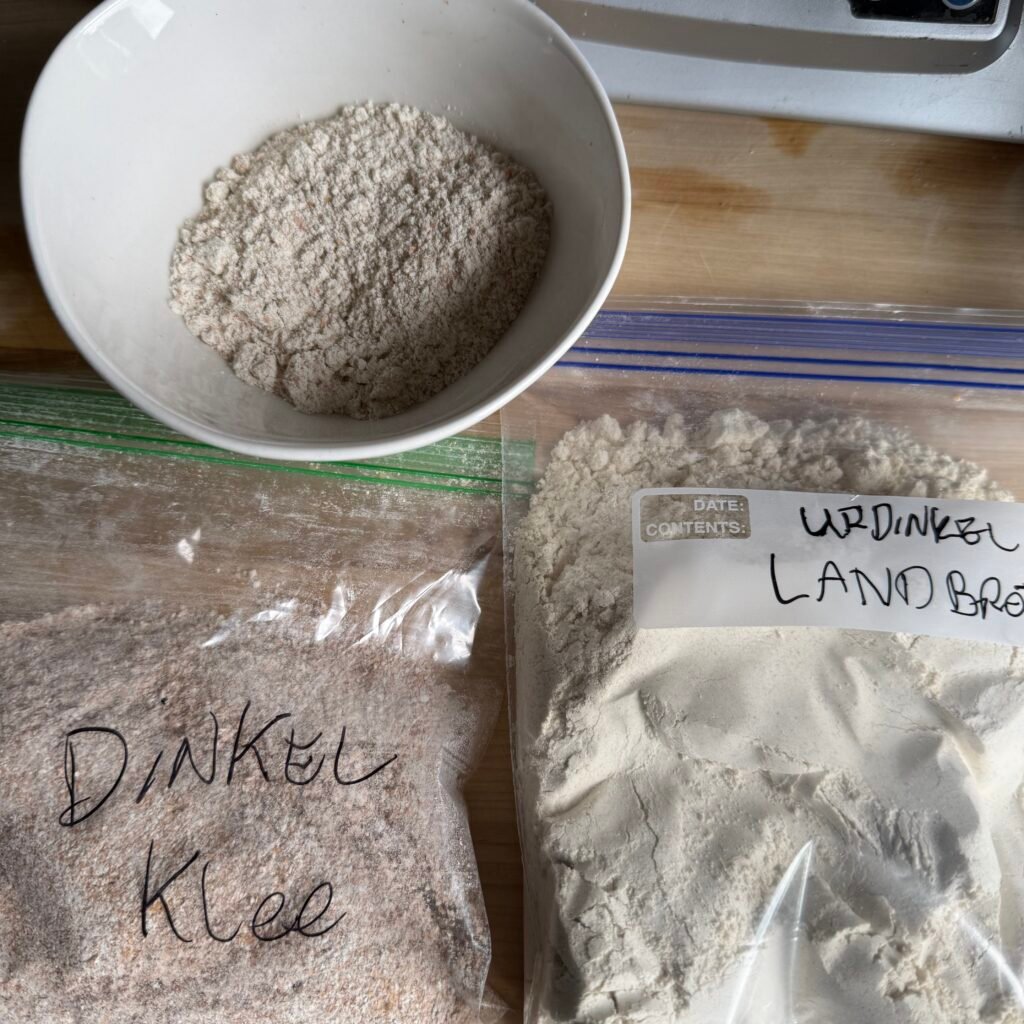
Weigh before and after sifting to verify: (post-sift weight ÷ pre-sift weight) × 100 = extraction %. When milling with the intention of sifting, grind finer than usual — a coarser grind removes more bran-adjacent endosperm than you want. Different grains sift differently; einkorn and emmer with their tight hulls produce different curves than modern wheat, so keep records as you build grain-specific knowledge. The bran fraction sifted out is not waste — porridge, crackers, pasta dough, and dense rye loaves all welcome it.
Ruchmehl: The Flour Worth Understanding
Ruch in Swiss German carries a meaning of rough, rustic, or unrefined — not pejorative, but honest. Ruchmehl is the flour of Swiss country bread: the Bauernbrot, the Graubrot, the sturdy loaves that taste like something rather than like nothing.
At 85–90% extraction, Ruchmehl occupies a specific position. It retains the intermediate bran layers and most of the wheat germ — where the fat-soluble vitamins and oils live — but removes the coarsest outer bran. The result is a flour with a pronounced wheaty, slightly nutty flavor; cream-to-tan in color, never white, never brown; significantly more minerals than white flour, feeding fermentation more actively; and still enough intact gluten proteins to develop real structure.
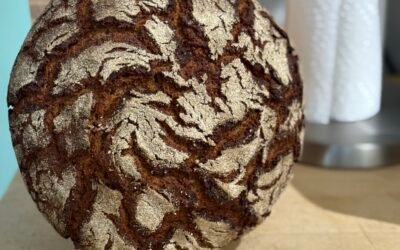
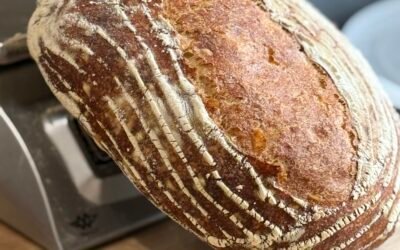
Baking with Ruchmehl produces bread with a dark, crackly crust, a moderately open crumb, and a flavor that is immediately identifiable as something made from grain rather than from a processing plant. It is the reason Swiss bread tastes like Swiss bread.
Halbweissmehl: The Overlooked Middle
Halbweissmehl — “half-white flour” — sits at approximately 80–85% extraction and is less discussed outside Switzerland than Ruchmehl, but it is arguably the more versatile flour for home bakers transitioning away from 100% whole grain. At this extraction level, the flour behaves much more predictably: gluten develops well, hydration is easier to manage, and the flavor is noticeably more complex than white flour without the structural challenges of high-extraction milling.
Marcel Paa uses Halbweissmehl frequently in his enriched doughs and mixed-grain loaves — it gives lift without sacrificing taste. For bakers working toward lighter crumb structures while still milling at home, this extraction range is often the right starting point.
Urdinkelmehl and the Spelt Question
Dinkel is the Swiss German word for spelt. Urdinkel — literally “ancient spelt” — refers to older, less domesticated spelt varieties. The distinction matters because modern spelt has been considerably hybridized toward higher yield and easier processing, while Urdinkel varieties retain a more complex flavor profile and different gluten characteristics.
Swiss Urdinkelmehl is typically available in both whole grain and sifted forms, with the sifted version behaving roughly like a spelt Ruchmehl in terms of extraction. Marcel Paa’s Urdinkel recipes illuminate how spelt behaves differently from wheat at the same extraction level.
Spelt gluten is more extensible and more fragile than modern wheat gluten — it tears rather than stretches under stress. This means shorter mixing times, lower hydration than you’d use with wheat at the same extraction, faster fermentation (spelt doughs overproof quickly), and gentle rather than aggressive shaping. These are not defects; they are properties to work with. Spelt at 85–90% extraction makes bread with an airy, slightly open crumb and a flavor that is mild but complex — quite different from wheat Ruchmehl, and well worth understanding on its own terms.
Grand Teton Ancient Grains: What You’re Working With
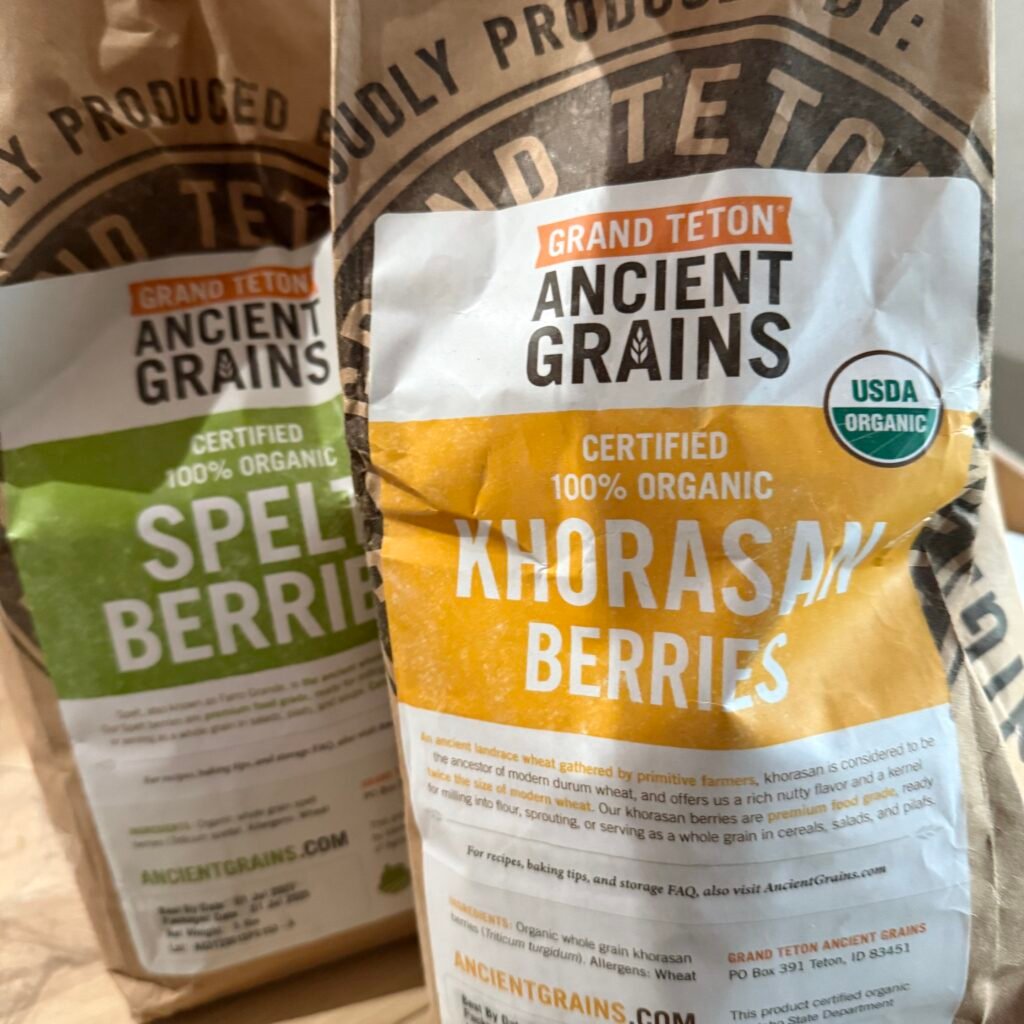
Sourcing matters as much as milling technique, and the differences between grain varieties are not subtle once you start working with each systematically.
Emmer has strong protein content but poor extensibility — it does not build an open gluten network. Dense, flavorful bread, excellent flatbreads, and outstanding pasta. At 85% extraction it becomes considerably more workable.
Einkorn forms a cohesive but very sticky, non-elastic dough — high in gliadin relative to glutenin. Best understood as a different material entirely: extraordinary for pancakes, quick breads, pasta, and cookies. Its flavor — rich, nutty, slightly sweet — is unmatched among the ancient wheats.
Spelt is the most workable of the group for yeasted bread, though its gluten is fragile. Milled to 85–90% extraction it produces loaves that genuinely resemble what Swiss bakers achieve with Urdinkelmehl. Handle gently, ferment attentively.
Rye has no gluten network. Structure comes from starch gelatinization and pentosan gels during fermentation. Long sourdough fermentation is not optional; it is the mechanism by which rye becomes digestible and structurally coherent.
Khorasan (Kamut) is a large-kerneled ancient wheat with high protein and a buttery, mildly sweet flavor. Strong enough for open-crumbed bread, and it rewards longer fermentation. At 85% extraction the golden color and flavor depth are remarkable.
Graf Mühle, Maisprach
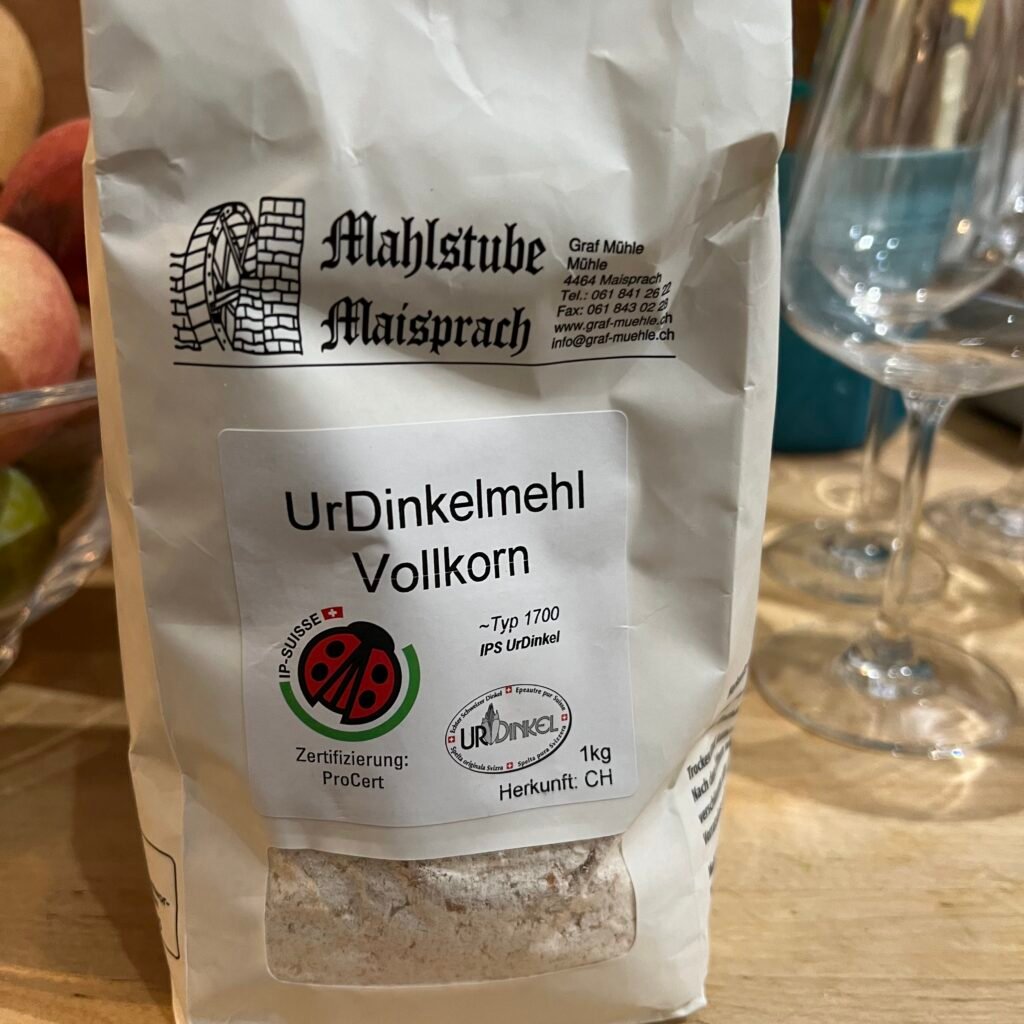
Graf Mühle — run by the Graf families at Unterdorf 16 in Maisprach, Basel-Landschaft — is a farm-integrated mill where grain is grown on-site, milled on-site, and sold direct through the Mühleladen. Their own UrDinkel is a primary crop alongside wheat, and their flour range spans both IP Suisse and Bio Suisse certifications with an unusually specific roster: multiple Ruchmehl grades, Emmermehl hell and dunkel, Kamutmehl, Hartweizenmehl, UrDinkelmehl in light, dark, and whole grain versions, and a set of house blends — Klostermehl, Pain Noir, 3-Korn, 5-Korn — that reflect generations of practical knowledge about what their grain does in the oven.
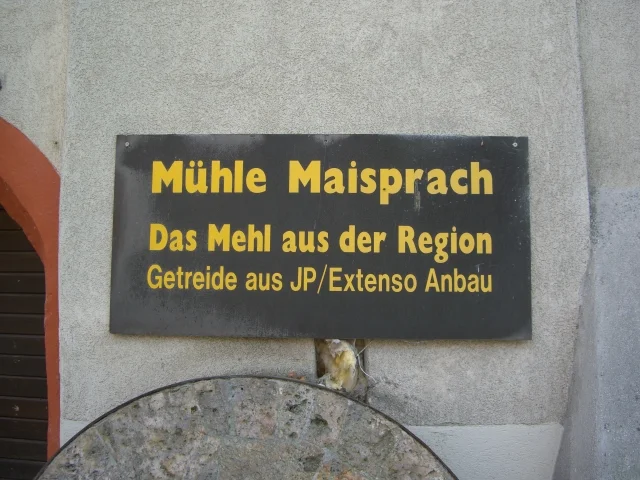
That specificity is what made baking in my sister’s kitchen feel like working with a different material. Each flour type was already dialed to a specific purpose; the extraction work had been done at the mill, by people who grew the grain. A Komo and a sifter close that gap considerably. The remaining variable is grain variety — which is exactly what sourcing from farms like Grand Teton addresses.
Swiss Bread Vocabulary
The flour terms are the essential ones to lock down first:
| Swiss German | English |
| Ruchmehl | High-extraction wheat flour (~85–90%) |
| Halbweissmehl | Medium-extraction flour (~80–85%) |
| Weissmehl | White flour (~72%) |
| Vollkornmehl | Whole grain flour (100%) |
| Dinkelmehl | Spelt flour |
| Urdinkelmehl | Heritage/ancient spelt flour |
| Zopfmehl | Strong white flour blend for braided bread |
| Hartweizen / Weichweizen | Durum / soft wheat |
Process terms that come up repeatedly:
| Swiss German | English |
| Vorteig | Preferment (poolish or similar) |
| Stockgare | Bulk fermentation |
| Stückgare | Final proof after shaping |
| Einschneiden | Scoring |
| Schwaden | Steam injection — Paa is emphatic about this |
| Reif | Ripe/ready (of starter or dough) |
Swiss hydration percentages and fermentation times are calibrated for flour at precise extraction levels. When substituting home-milled flour, adjust hydration and watch fermentation by feel rather than the clock.
Closing
What the Swiss flour system offers, more than any specific product, is a vocabulary for precision. Knowing that Ruchmehl means 85–90% extraction, and understanding why that extraction range produces bread with a specific character, gives you a target to aim at rather than a product to import. With the right equipment and the right grain, the target is achievable.
My sister’s bread always tasted like it came from somewhere specific — from a place with soil and seasons and a particular mill that had been running for generations. That flavor is partly terroir, partly variety, and partly extraction. The terroir remains untranslatable. The variety is increasingly available, thanks to farms like Grand Teton. The extraction is now, finally, in your hands.
Grains sourced from Grand Teton Family Farm (grandtetonfamilyfarm.com). Swiss baker Marcel Paa’s recipes at marcelcooks.com. Graf Mühle, Maisprach: graf-muehle.ch.
0 Comments