
Madeleines from a Man Who Deserves More Credit
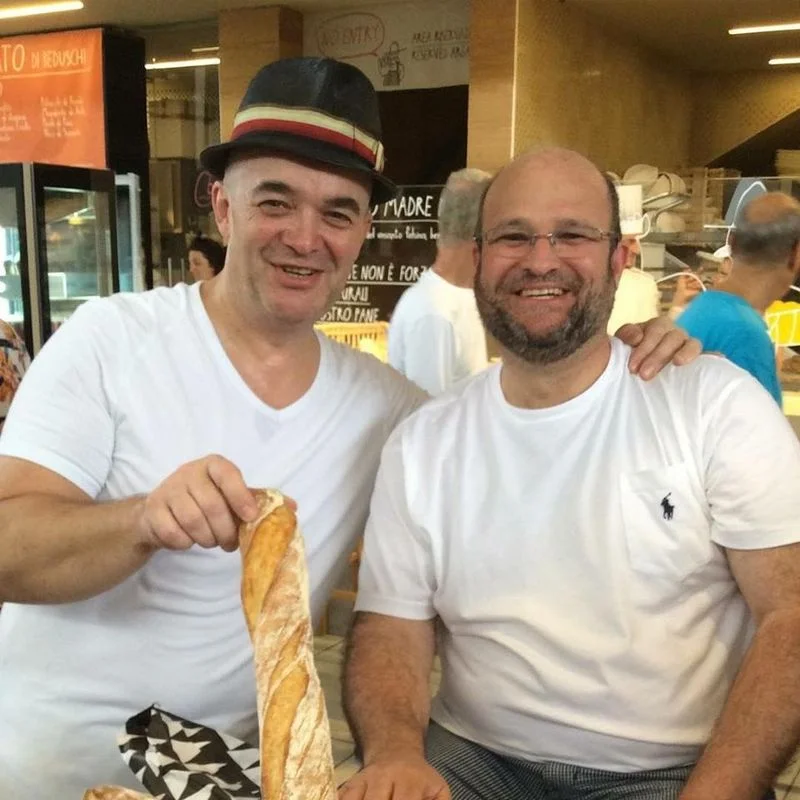
French master baker David Bedu, based in Florence, Italy, is the creator of the Croissant Bicolor. I met him online, then visited him at the Mercato Centrale one summer.
I was working on Madeleines recently and wasn’t satisfied with what I was producing, so I reached out for advice. He sent back handwritten notes with a recipe.
This is how generosity moves through kitchens. A method travels. The originator stays behind the counter.
I’m putting his name on it.
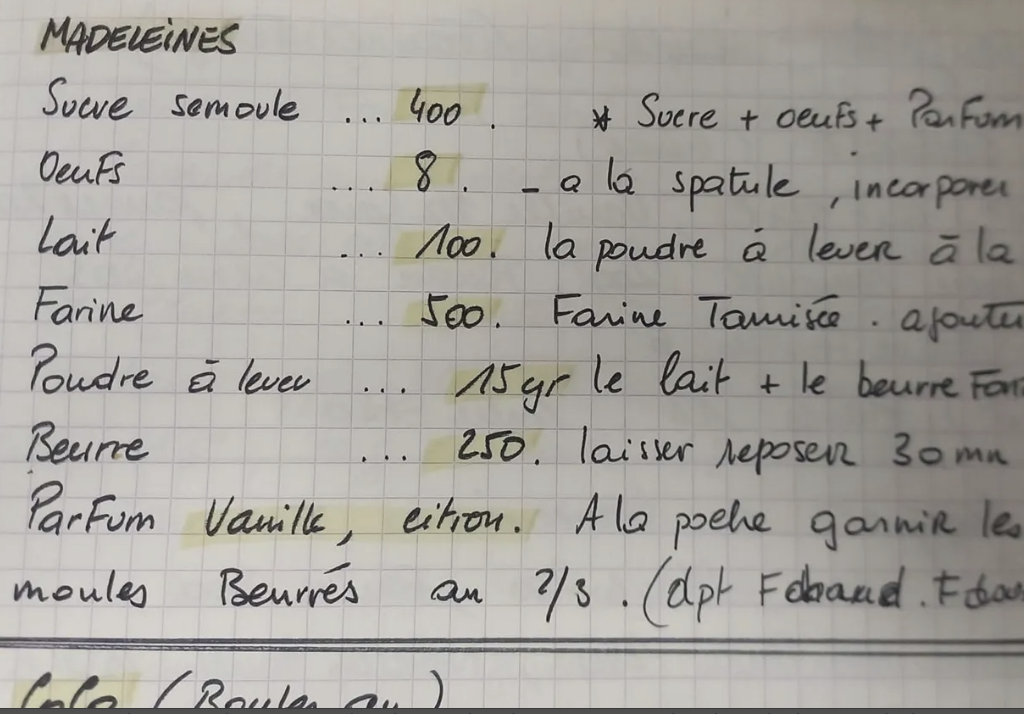
Short on wheat flour, I used part spelt to compensate. I double-buttered the molds, filled them to two-thirds with a piping bag, and waited the thirty minutes the recipe requires. The thirty minutes are not optional. They are where the hump comes from.
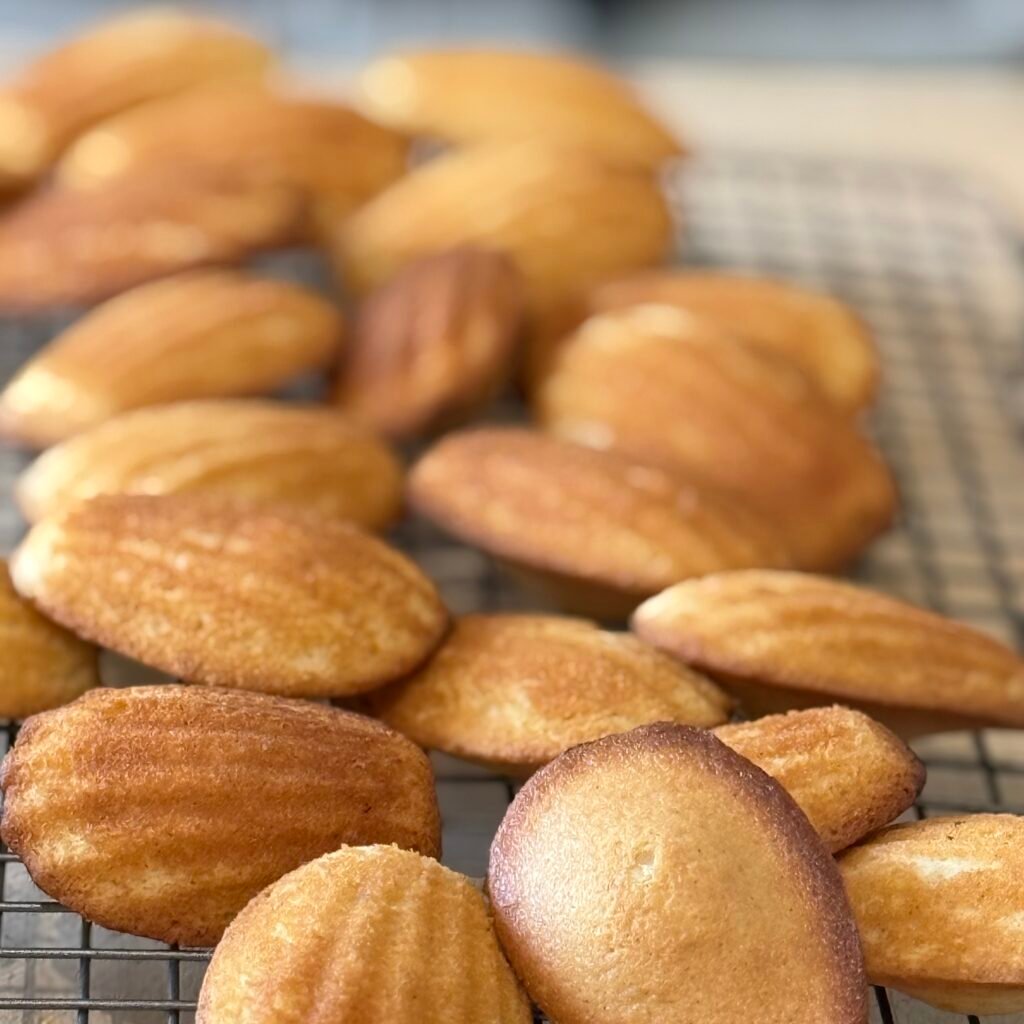
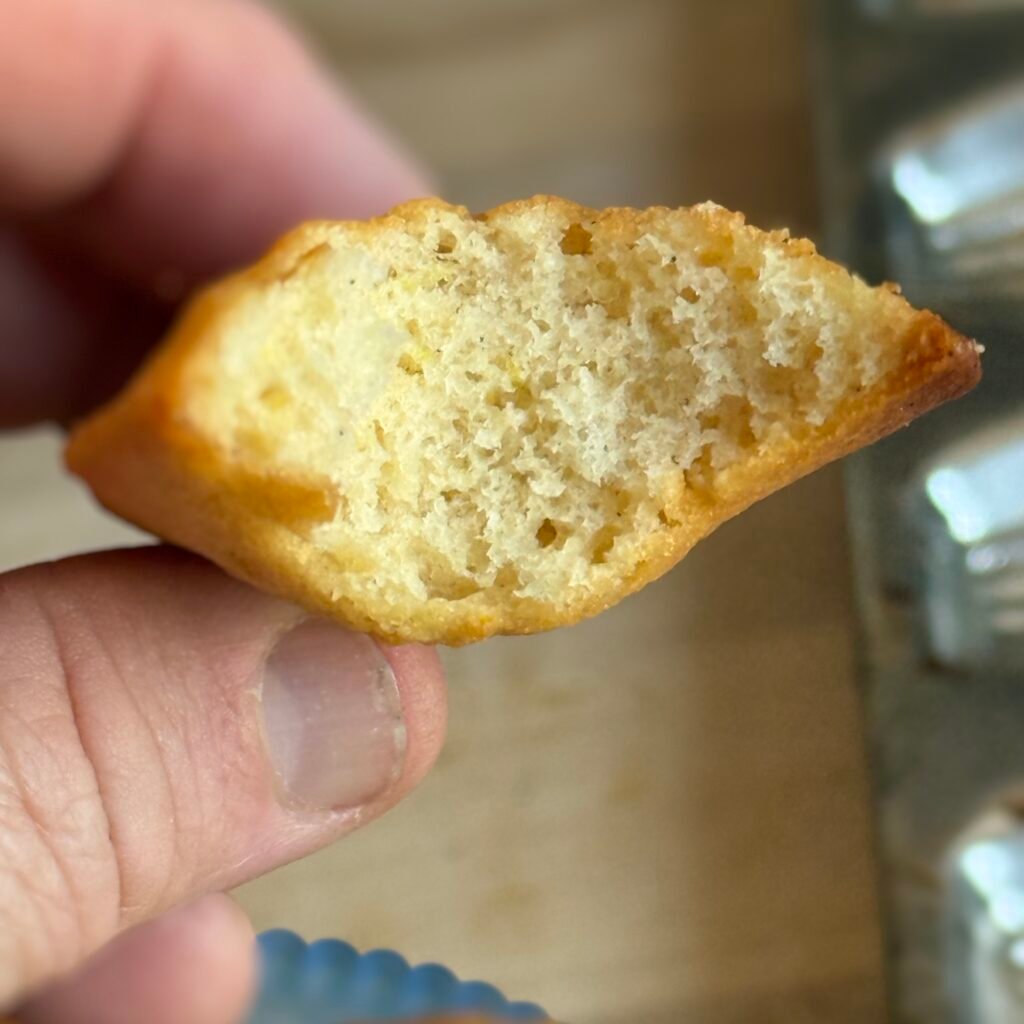
They came out golden and light. The spelt gave the crumb a slight nuttiness, a little more tenderness than straight wheat. The lemon was present. The vanilla was underneath everything, the way good vanilla is — you would notice its absence before you notice it’s there.
A few things the recipe teaches, if you pay attention:
Use a spatula, not a whisk. You are not aerating the batter. You are combining it. There is a difference, and the madeleine knows it.
The 2/3 fill is exact. More and the batter runs over; less and you lose the dome. The piping bag is not fussiness — it is control.
Double-butter the molds. Once is optimism. Twice is craft.
Rest the batter for thirty minutes before baking. This is the step people skip. Don’t skip it.
David’s parfum note reads: vanille, citron. Both. The lemon is the one you’ll taste first. The vanilla is the one that makes the lemon make sense.
Madeleines — David Bedu
INGREDIENTS
- 400 grams caster sugar (sucre semoule)
- 8 eggs
- 100 milliliters milk
- 500 grams flour, sifted (or part spelt)
- 15 grams baking powder (poudre à lever)
- 250 grams butter, melted (plus extra for the molds)
- 1 teaspoons vanilla extract
- 1 lemon zest
STEPS
- Mix sugar, eggs & perfume: Combine 400 grams caster sugar (sucre semoule), 8 eggs, 1 teaspoons vanilla extract, and 1 lemon zest in a large bowl. Mix with a spatula — not a whisk, not a mixer. The spatula is deliberate. You are not aerating; you are combining.
- Incorporate the dry ingredients: Sift the 500 grams flour, sifted (or part spelt) and 15 grams baking powder (poudre à lever) together. Add to the egg mixture with the spatula, folding until just incorporated. No lumps, but no overworking.
- Add milk and butter: Add the 100 milliliters milk and the melted 250 grams butter, melted (plus extra for the molds). Fold again until the batter is smooth and uniform. It will be looser than you expect. This is correct.
- Rest: Cover the batter and leave it to rest for 30 minutes. This is not optional. The rest allows the flour to hydrate and the batter to firm slightly — it is what gives the madeleine its hump.
- Prepare the molds: Butter the madeleine molds generously — twice. Let the first coat set, then butter again. This is how you get the shell. Fill each mold to 2/3 full using a piping bag. No more.
- Bake: Bake at 200°C (390°F) until golden at the edges and just set at the center — approximately 11–13 minutes depending on your oven. The hump should have risen. The underside should be golden. Remove from the molds while still warm.
0 Comments