
Some recipes deserve to be revisited. This croissant formula — pulled from my culinary school copy of Special Decorative Breads — is one of them. The original recipe calls for commercial yeast alongside a levain, a combined-method approach that balances the reliable lift of instant yeast with the complexity of a pre-ferment. But I’ve been working with a sweet levain long enough now to trust it on its own. So I dropped the yeast entirely and let the levain carry the whole thing.
The formula is built around a sweet starter (29g flour, 29g water, 8.7g mature starter. Note: ferment before final mix). Feeding the levain with a touch of sugar, it generates a milder, less acidic ferment. Using 73g, it’s integrated into the final mix and contributes nearly half the hydration. What else goes into it; flour, salt, a whisper of egg for richness, and water. Simple, but the ratios are tight and deliberate.
Here’s the final mix formula (yield=six croissants)
Flour: 171.0 g
Salt: 4.0 g
Sugar: 25.6 g
Egg: 0.2 g
Water 75.0 g
Sweet levain 73.1 g
Yield 350.0 g
Pre-fermented flour 14.5%
The method
- Knead: Twelve minutes on slow speed, adding the levain halfway through. This keeps gluten development controlled and gives the levain time to incorporate without tearing the network.
- Rise: Four to five hours at room temperature. With no commercial yeast, patience is the ingredient here. The sweet levain builds flavor and structure on its own schedule.
- Laminate: One double fold plus another single fold. Alternatively you can just do three single folds. Rest 10 minutes between each. This is where it all came back: the feeling of the dough, the butter, the layers accumulating fold by fold.
- Cut and Shape: Six croissants from the slab. The dough handled the lamination beautifully — extensible but not slack, layered without tearing.
- Proof: 5 hours. Again, slower than a yeasted dough — but the flavor developing beneath the surface is worth every minute.
- Bake: 420°F for 15–20 minutes, until deep golden and the layers have opened dramatically.
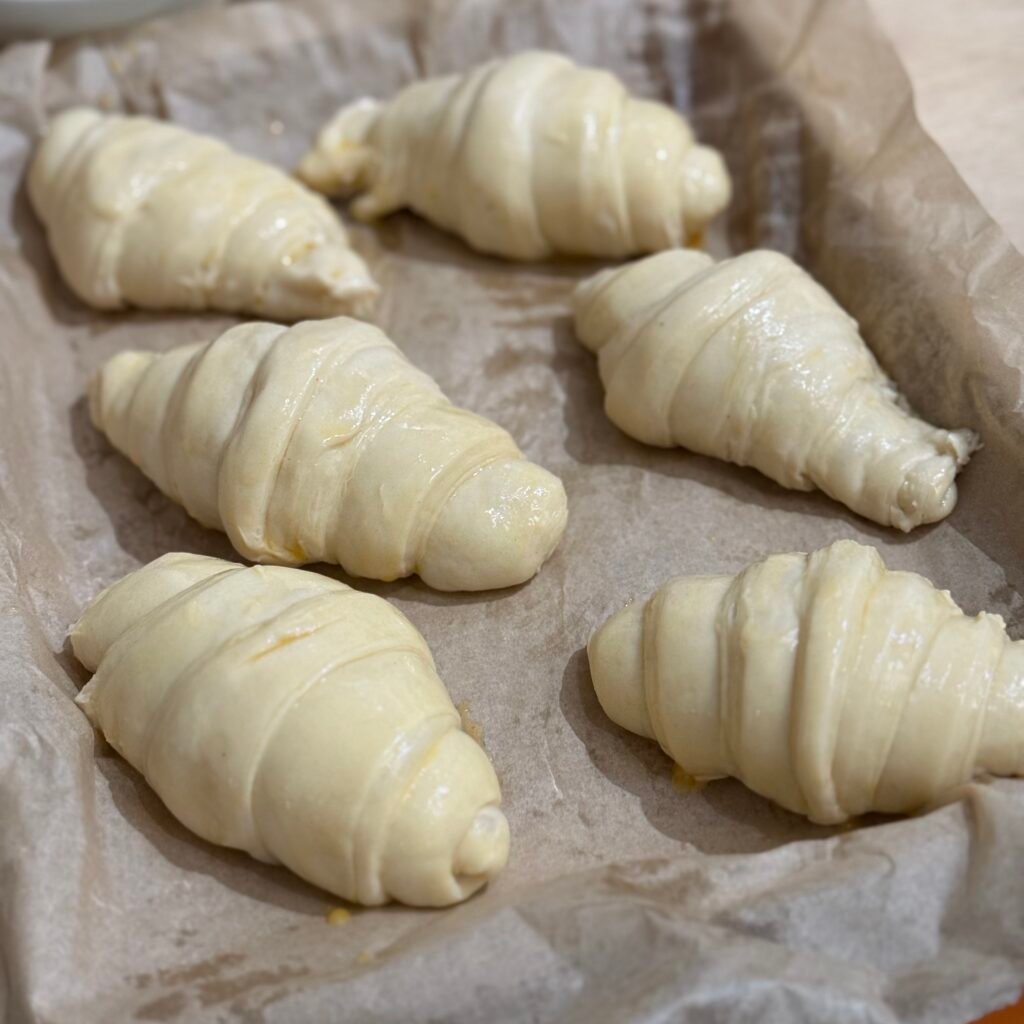
Above: pre-baked croissants after overnight proofing — plump, glossy, ready for the oven
Below: fresh from the oven
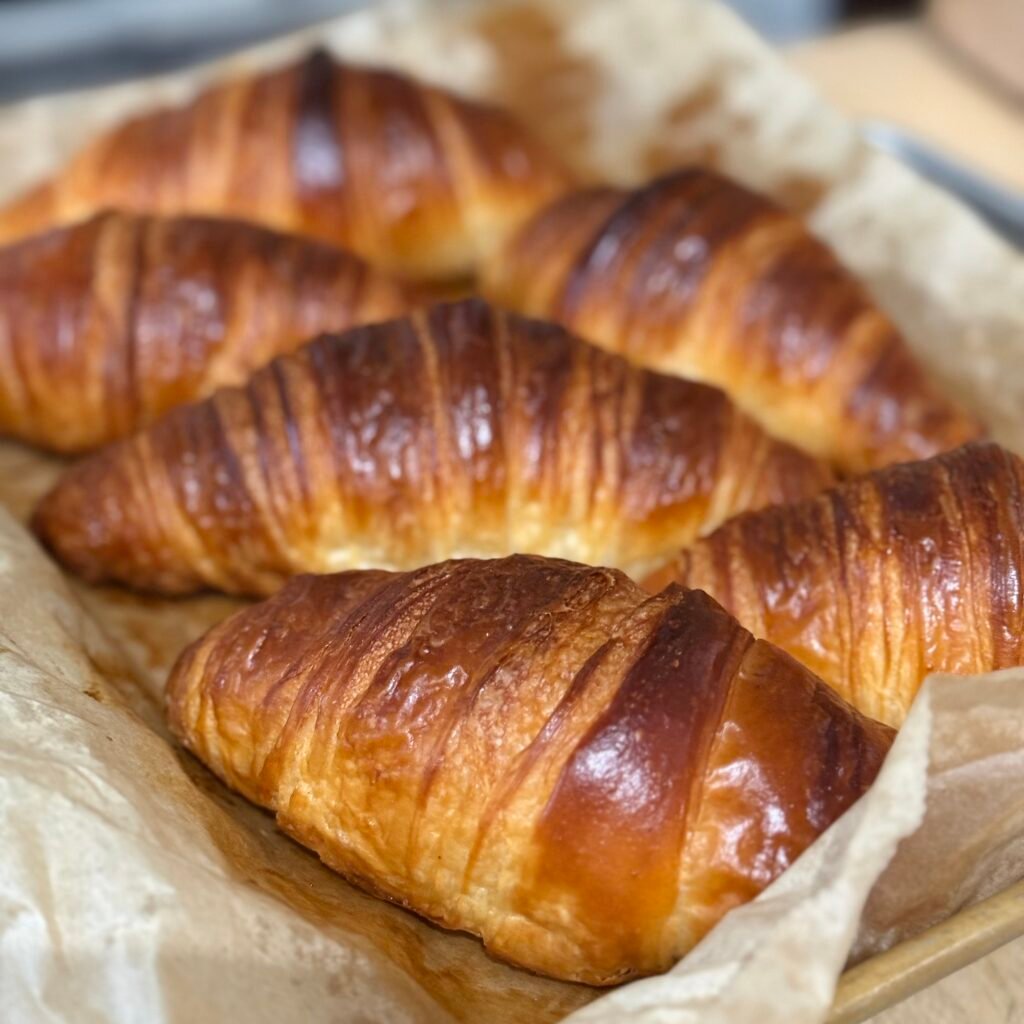
Note how the caramel lacquer is the sweet levain at work. Now I just need the jam.
0 Comments